
Turning a Box of Franzia Into a $100+ Bottle of Wine
A coda to our recent 2-Part tasting, where we take a look at where the technology might take us in the near-ish future.

When wine is de-alcoholized these days, we use vacuum distillation to separate it into its component pieces, then ditch the alcohol, then reconstitute all the rest. The goal is always to preserve as much of the original wine as possible.
But what if that wasn’t the best way to do it?
What if we could actually be choosey about which parts to reconsititue, beyond just the alcohol?
This will be a short one today. Or, well, a short write up. Followed by an obscenely long video posted below.
You don’t have to watch the whole thing! We will guide you to which parts to jump to. But this video BLEW our minds when we stumbled across it last month. And it pertains to de-alcoholization and the vacuum distillation technology as it relates to wine.
It suggests something that’s going to outright slay some of us, because it flies in the face of fine winemaking ethos - and tbh we agree! But in terms of de-alc wine and big bulk brands, and then perhaps on special occassions for fine wine, this could be a game changer.
We’re talking about this scientist fella here:
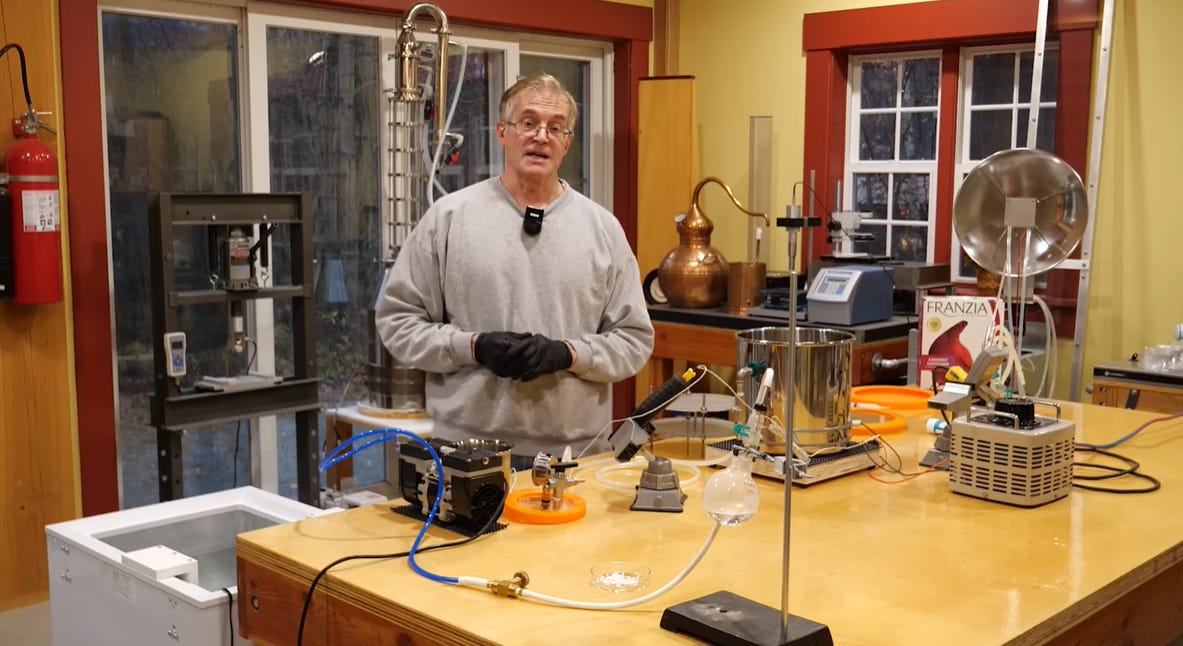
He cobbled together an actual vacuum ditillation set-up with parts you can buy on Amazon! And he walks you through the whole set-up. It’s fascinating, but you likely aren’t interested in that part, so you can skip it below, if you like.
He then used this set-up to vacuum distill a 3L box of Franzia Red Wine! Which he calculated came out to $3 per 750ml bottle.
The distillation separated the wine into nearly a dozen parts, from the highest alcohol liquid (roughly 190 proof) to the lowest. The color was all in the last liquid distilled, an ink-textured red liquid of pure ooze.
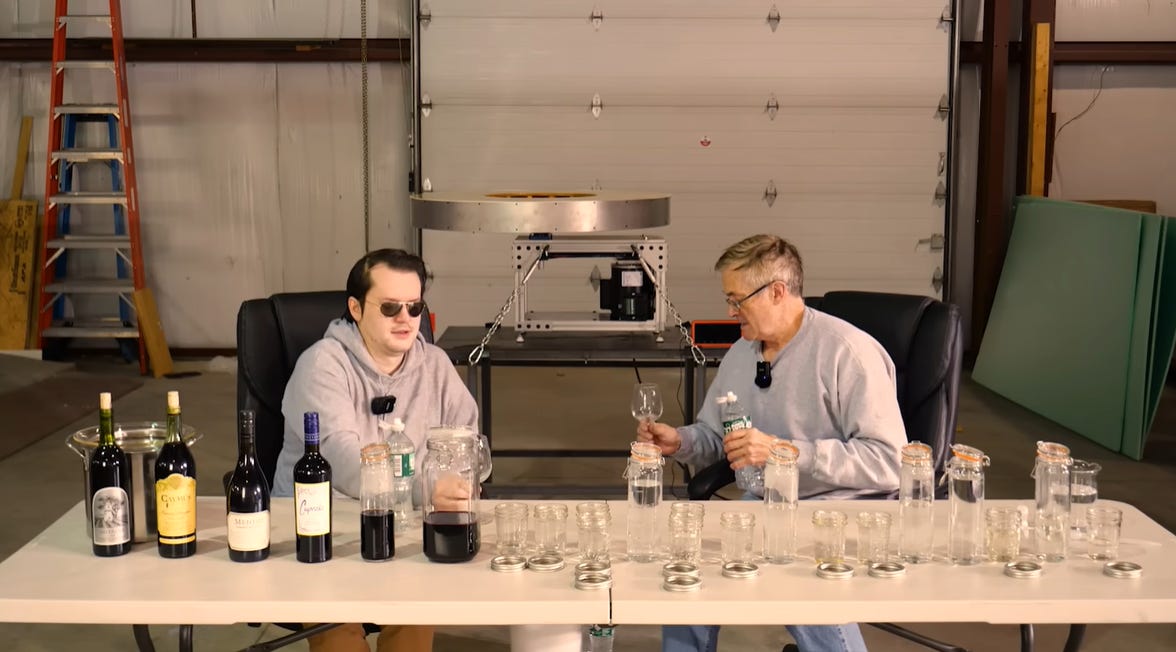
He and a partner then tasted through all these component parts, and discarded any that tasted off or significantly bad. (They discarded roughly 4 parts.)
They then reincorporated the remaining parts. Nothing fancy, they literally just stirred them back together in a pot.
They then taste tested their re-mixed Franzia Red against: the original Franzia red it was made it from, then a bottle of Cupcake, Meiomi, Caymus, and Silver Oak.
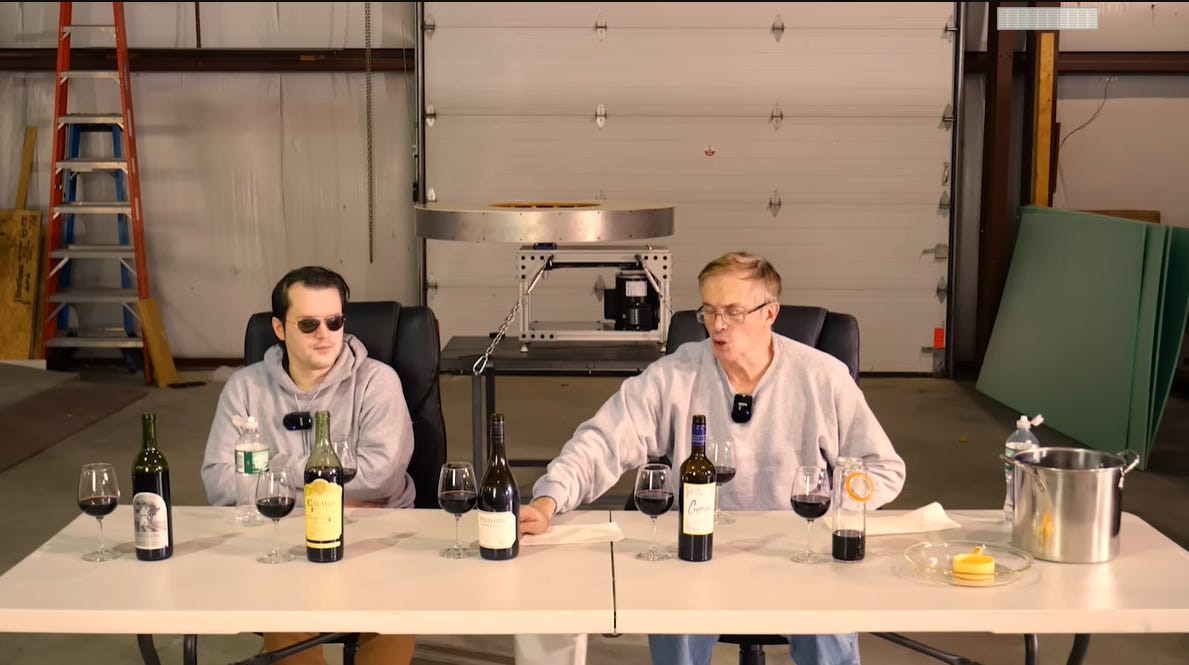
Here’s the video below, poetically broken down into its component parts (clickable time links):
Starts with a walkthrough of the home vacuum distillation set-up (and it’s thorough. Over half an hour! You can likely skip this.)
Distillation process begins at 34:40
Initial tasting through the component pieces begins at 48:51 (note the distillation process actually took over 9 hours!)
Second tasting and deciding which pieces to get rid of begins at 1:09:56
Remixing the parts they want to keep is at 1:25:26
Taste Test of thier re-mixed wine against the original Franzia they made it from + 4 additional bottles of fine wine ranging between $7 - $100 begins at 1:26:56
Full Video:
Why Is This So Mind Blowing?
We currently use vacuum distillation to separate the alcolhol while keeping as much as possible of the original wine. That makes sense. It’s the mindset of a winemaker: adhere to nature as much as possible.
BUT…if we’re going through de-alcoholization, we’re already tinkering with the wine to a fairly steep degree. Maybe we should pick and choose what we keep? Beyond just the alcohol?
If you watch the video, the results of the taste test at the end is pretty wild. They’re admittedly not tasting the most elegant wines in the world against it, but they made it from Franzia, ffs. The fact that it beat anything, let alone everything, is astounding.
And this suggests we can do this for big bulk brands, too. They’re already manifacturing their wine, using poor quality original juice, adding and subtracting as they see fit. What if we could tailor the final quality to this degree? Is there any reason on Earth that we shouldn’t?
QUICK ANECDOTE: I know a winemaker here in LA that had a wine which developed bad levels of VA (volatile acidity, for the non-industry folks.) As a hail mary experiment, they vacuum distilled it and instead of removing alcohol, removed the VA. The reincorporated wine is not what the non-vacuum distilled version of the wine would have been had it not had VA. It doesn’t taste “normal” but super interesting and “different”, but also pretty tasty. Certainly a massive improvement over the flaw of VA.
Now consider: what if we used this technique to do more than just remove the obvious flaw, but then to tailer the final flavor profile of the remaining wine like these guys do in the video?
I don’t know how easy this would ever be to do in a non-home set-up and to make wine for wide distribution/sales. But man did this experiment make me think.
Now let me know what YOU think! Is this nutty? Dumb? Or just distasteful? Or is it as interesting as I think it is?
Happy Dry, Damp, and Wet January, all. Stay curious.