
Redefining Wine & Entrepreneurship w/ Maddison Violet
Fermenting more than just grapes, making a de-alc wine worth drinking, and finding all the ways wine can surprise.

Maddison is the owner and winemaker at Ve Oh Lay Acres Winery & Farm in the Okanagan Valley, which specializes in “unique honey wines and small lot curation.” Her journey took her from barback to building an estate, earning distinctions like IWSC/WSET Future 50 Under 40, Business Elites Top 40 Under 40, and Woman of the Year Finalist in Kelowna for leadership across winemaking and beverage education.
She also recently launched Muse - a female-owned vegan non-alcoholic wine brand, digging into how wine meets wellness and craftsmanship. She’s worked harvests in New Zealand, Australia, and Canada, and remains dedicated to finding all the ways wine can surprise people, both through sensory mastery and storytelling.
We had the opportunity to do an email interview with Maddison, and inspired by Tom Wark’s “The Ramble”, we tried a back-and-forth Q&A that plays more like a conversation, less like a pre-set interview. We’d hoped to finish this before January was over, but Maddison’s brand has gotten so much attention recently that this wound up taking well over a month! Oopsie! (But great problems to have for Maddison.)
Whenever Maddison gets to take a breather, she may guest on the podcast to talk about a wine and movie pairing, and in the meantime, here’s our Vinterview with a fascinating new winemaker up in Canada.
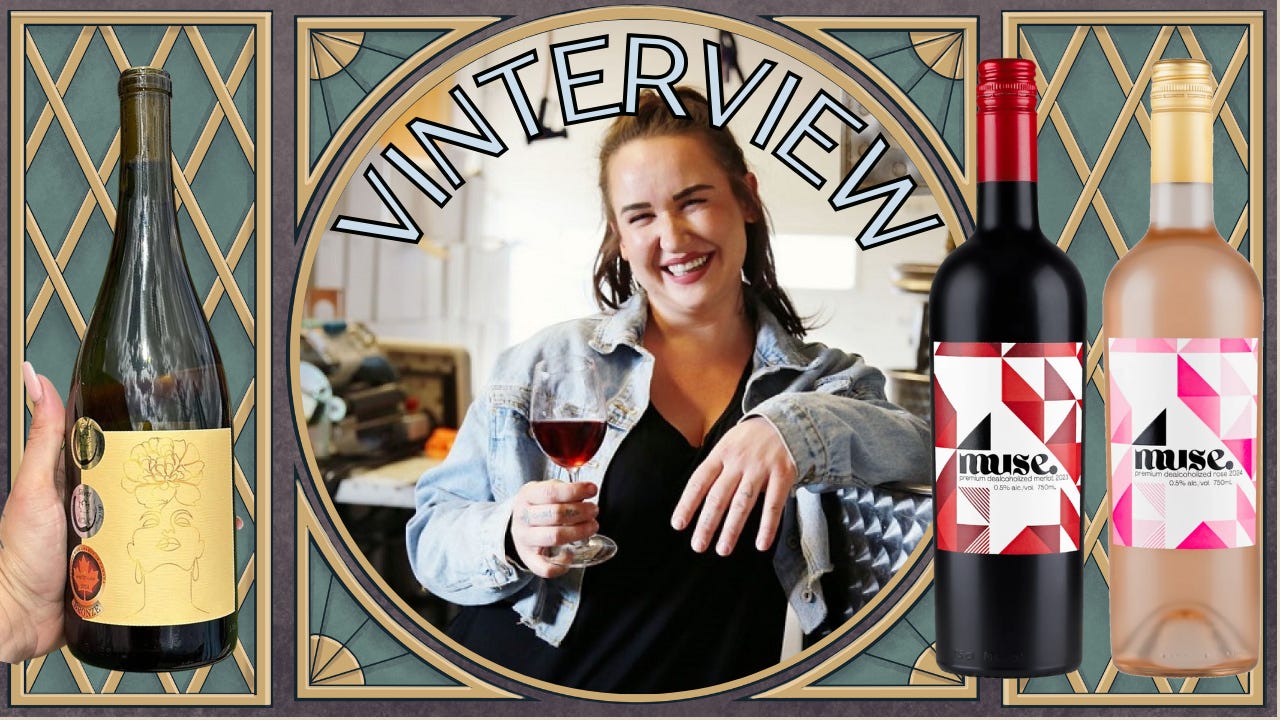
DAVE: Hello Maddison, and welcome to this Vintertainment "Vinterview"!
Let's kick things off with the obvious first question: why wine? How did you fall into the wine world to begin with? Why attracted you to the industry from both a personal and professional standpoint?
MADDISON: Amazing!! What fun is this!
So, this all started when I was working at a dueling piano bar in West Edmonton Mall in my early 20s, they used to host these lavish wine pairing dinners and it was so interesting to see how you pair wines, the unexpected match made in heavens, the variety of wines from around the world, how the same grape from New Zealand tastes completely different from the same grape in France. It was my managers that had let me know that you can go to school for this which opened up the world of being a sommelier. I started my WSET Level 1 in Vancouver and that really got me hooked to further continue my studies.
I think what made me fall in love with the wine world, personally and professionally, is that it’s global. Yes every country and region has its own style and methods but if you know wine, it can take you around the world and that was what inspired me most was knowing that I could study this for the rest of my life and I would have no limitations in where I could work and in what line of work - bar, restaurant, tasting room, sales, vineyard, production - learning wine skills could take me everywhere I wanted to go.
I’ve been fortunate enough to work in New Zealand, Australia and explore the western side of USA all in the name of wine. I had plans to continue my travels into South Africa before Covid hit and I had to pivot and here I am, with my own winery I have built with my husband!
DAVE: That’s a perfect segue to talk about the winery! Though first I have to agree with you about the “global” part of wine. I fell into wine mid-life, having zero background with it, never having drunk it in my 20’s or early 30’s. And when I did start sipping it I quickly wondered, truly: what the heck was all this stuff? And down the rabbit hole I went. Deeper and deeper into a Wonderland that is seemingly boundless yet unlike Alice’s, follows a certain logic that can be tracked. It’s a best-of-both-worlds universe with equal parts whimsey and science.
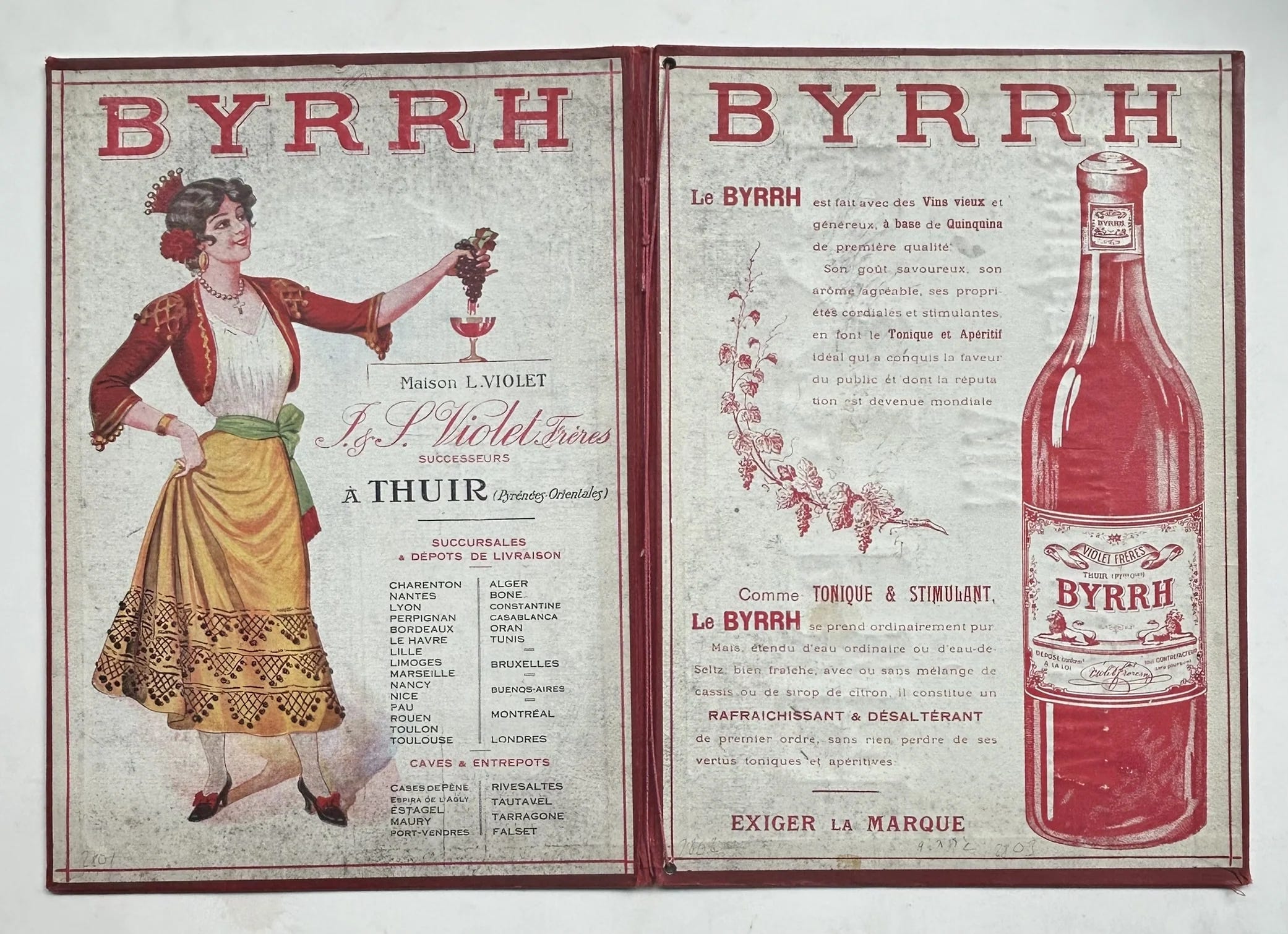
But on to the winery that you and your husband founded. I read up a bit on his history, and that he came from the French family that created the famous BYRRH. I’d never even heard of that aperitif before reading up on him, and then LITERALLY YESTERDAY I was in an old-school wine shop, and there it was on the shelf! I didn’t pick it up, but I will definitely have to the next time I go there.
In any event, you two married and then banded together to create VE OH LAY, a play on his Surname, “Violet”. And this isn’t just any winery. Please: tell our readers what the winery specializes in and how you two decided to go this route. And was it difficult to figure out how to make this kind of wine since it’s not the traditional norm?
MADDISON: Oh my gosh that is too cool about the Byrrh! What are the chances! I believe they keep the same traditional label on the new vintages now and it should be signed with Violet Freres! How fascinating - we have so many newspaper clippings, magazines, propaganda from that era of its peak, it’s like a time capsule. Including some original bottles that have been preciously stored.
So our winery started with a foundation of Mead or more commonly known as honey wine. We have made quite the name for ourselves for a meadery with many returning customers and special trips being made just for us! Mead started from my husband, Laurent, as he is the one with the cool wine history behind him, he basically grew up in a winery.
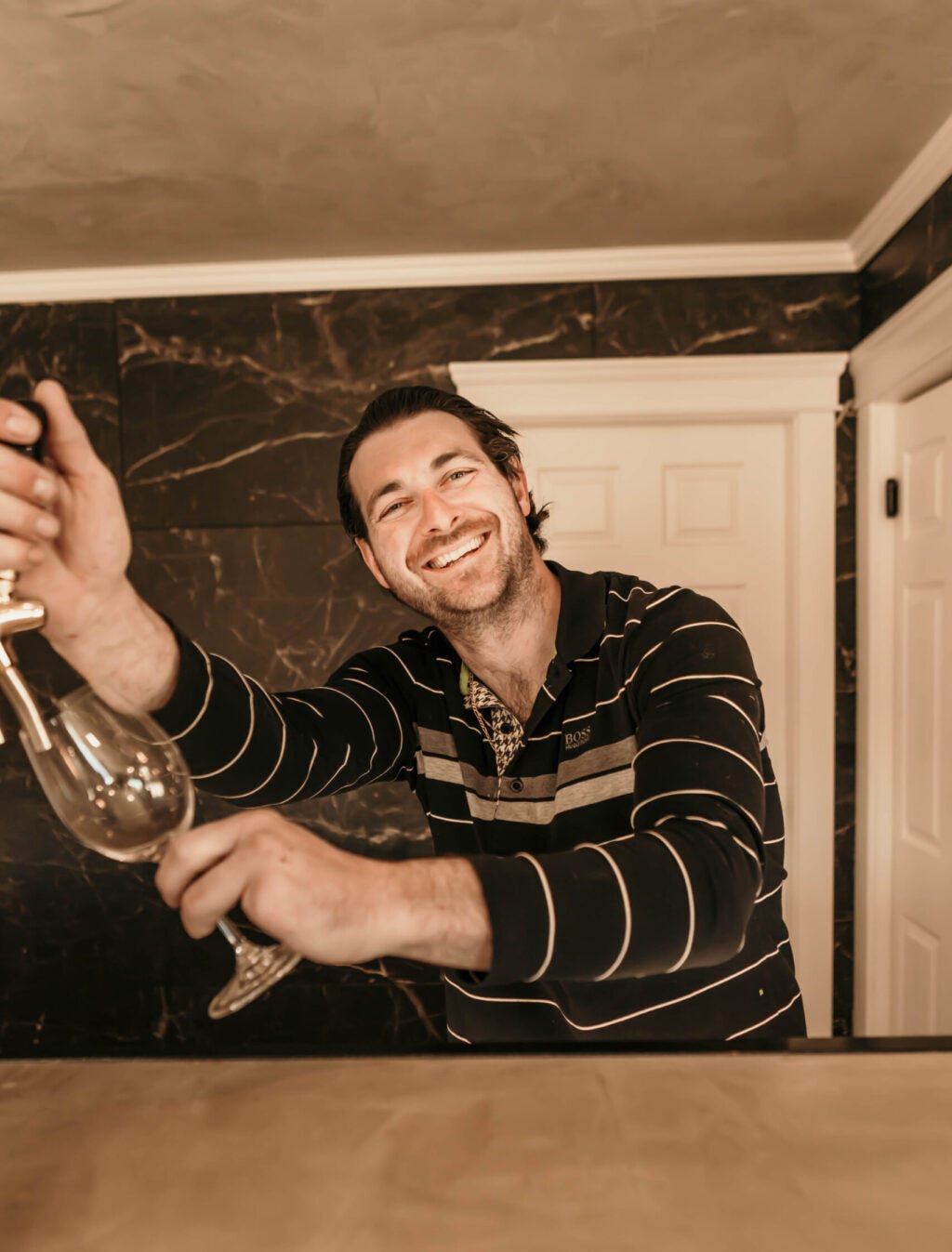
He was raised by his grandparents here in the Fraser Valley. They started the first winery there called Domaine de Chaberton. This is where Laurent grew up driving his dirtbike up the vineyard rows, playing lego under the office desks, working on the bottling line, learned to drive a tractor. From this experience watching his family through the years of winery ownership and management, he did not want to rely on a single crop of fruit for the following years income. To be honest, I think he was also bored of grapes haha.
He went to UC Davis and did the Mead course and that really sparked something creative in him. I know when we first started making wine together, I was like no way, grapes are superior. The more I got into it, the more I realized just how creative I can be with it. Fruits, flowers, vegetables, herbs, hops, it’s been endless in experimenting. That being said, it has been challenging at times. For example, I hope to never work with strawberry again. It was an absolute nightmare to filter. Fermenting it wasn’t a treat either. Certain juices like rhubarb should be added post-fermentation. Cherry is a beautiful fruit to ferment but you absolutely cannot have any leaves or stems in it - requiring much more labor on the picking side. I often have cherry ferments just take off on their own with wild yeast. Pomegranates is a whole other story! Most berries just turn to absolute mush post ferment so it’s always a nightmare getting them out of the tank.
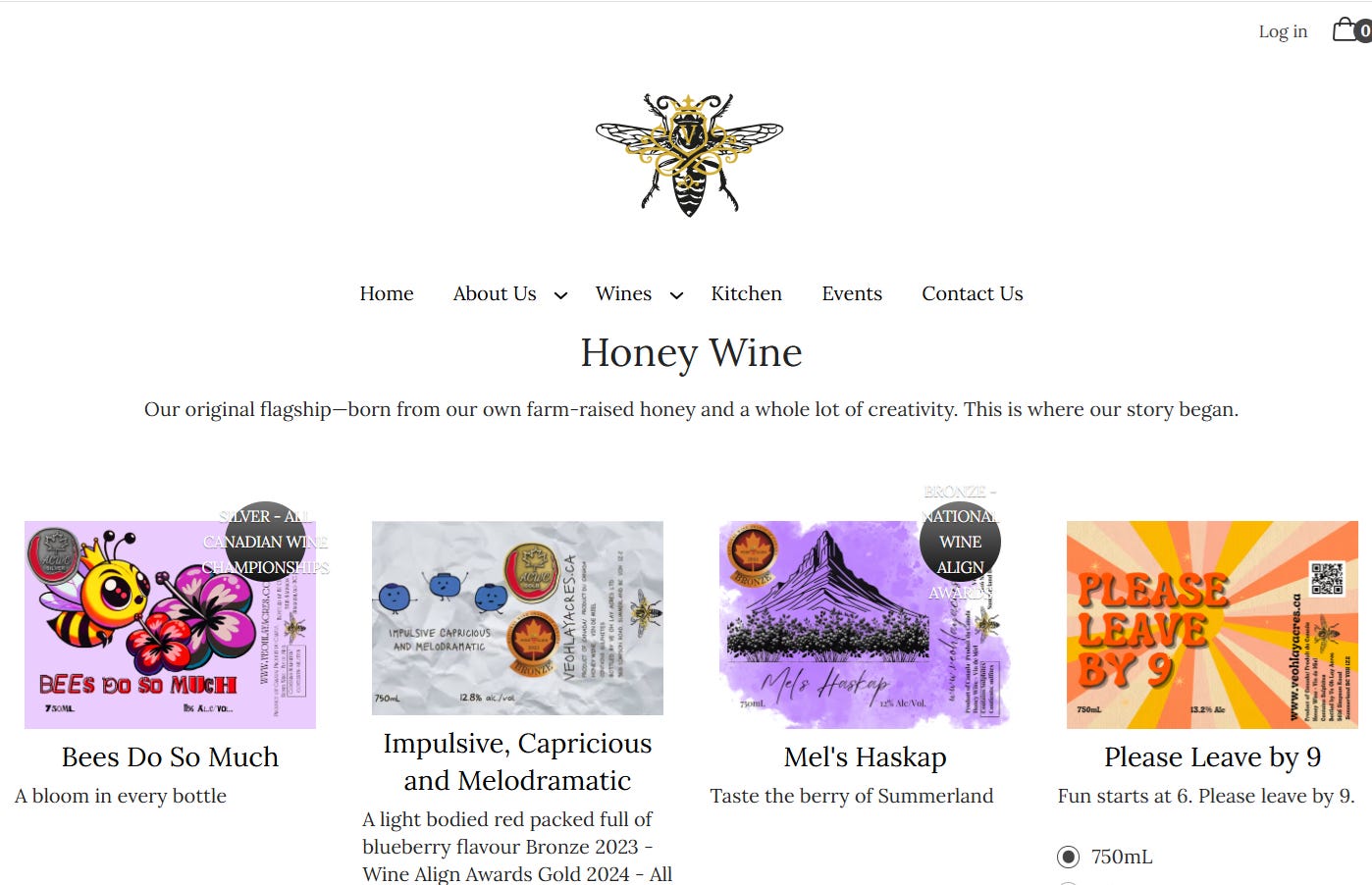
Challenging? Yes. Worth every moment? Yes. Did I make my husband pull over on the side of the road one time to pick fresh lilacs and ferment those? Yes yes yes! Mandela said it best - I never lose, I either win or I learn - and the learning is not stopping anytime soon.
DAVE: I love every part of that answer. I am endlessly fascinated by the fermentation of all things. So many of our modern cultures were influenced by European colonialism, and so of course Vitis vinifera came everywhere with them. And there’s no denying that vinifera makes incredible wine. What is up for debate is how good everything else could be if we just gave any it half the attention we’ve given vinifera.
Before Prohibition, a number of native American grapes (Catawba!) were making wines that the European press raved about. At one point post-Phylloxera, a third of French vineyards were planted to hybrids. At least before the French government - in a surge of native species protectionism - started paying farmers to rip them out and replant traditional varieties. But they had a brief moment of winemaker and consumer popularity. So much of the modern wine ecosystem has been shaped by conscious decisions and bias, it does my heart good to see evidence that we can have both: tradition and endless innovation.
And on the subject of honey mead and honey wine, there’s a winery in Michigan that I love, that makes wine with maple syrup, and even has one completely dry wine made entirely from it!
So on top of honey wine, you’ve recently started a new de-alcoholized band, MUSE, featuring a red Merlot and a rose (also Merlot?) What made you interested in entering this space? Were there personal reasons? Or just another wild challenge? Or both? And how challenging was it to craft a Premium de-alc wine? Other winemakers are on record as saying it was the most difficult thing they’ve ever attempted!
MADDISON: Maple Syrup!! That is very cool, we have not yet played around with maple yet, I think certain fruits would lend well with the maple flavour but I don’t know how much maple would be left over from fermentation? I am sure somewhere here in Canada does it, probably Quebec and will have to explore this!
On the subject of our de-alc MUSE: yes! Our rose is a blend of merlot & sauvignon blanc. We wanted to enter this space out of a personal goal, it’s hard to regulate your consumption when you are in the industry and there is not a lot of great, affordable options out there that we really wanted to create it for ourselves.
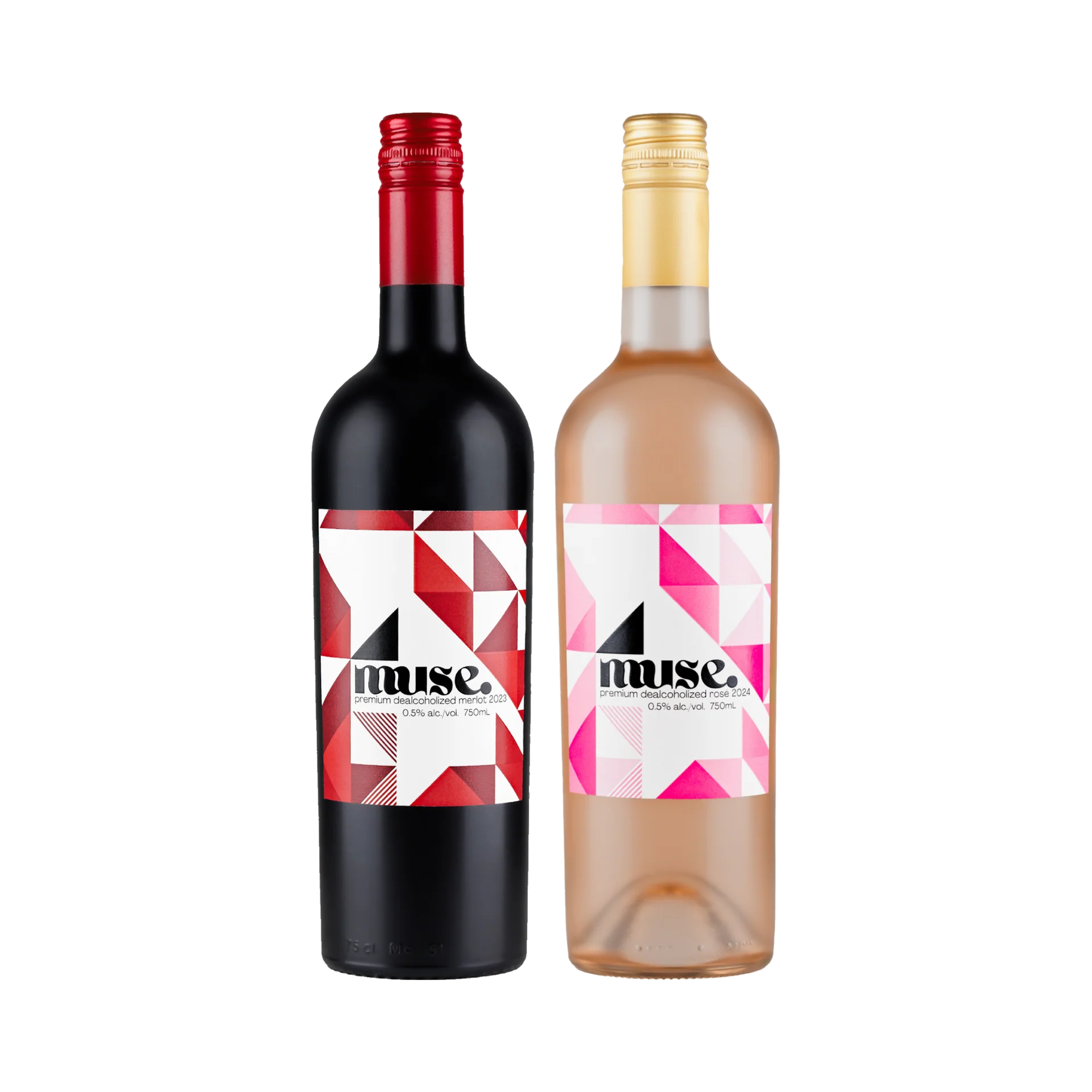
It’s also very trendy right now here in Canada, we have full non-alcoholic bars and liqour stores. People are really focusing on a health conscious movement, especially with the younger generation, they aren’t drinking. They are experienced-based more than anything. Sparkling water in a wine glass just doesn’t cut it anymore, customers want the look and feel of wine. The social inclusion is a huge factor. I personally use it to pace myself at events, glass of wine here, glass of non-alc here. No one is the wiser.
Plus who doesn’t love a challenge! It has been extremely difficult, honestly the most difficult that we’ve come across. Wine needs to be balanced - I believe it’s a triangle of alcohol, fruit & acidity and when you remove one, it’s very hard to keep that together. We’ve been experimenting with different white grapes, we tried chardonnay but it just tasted like lemon. Sauvignon Blanc has been the best so far cause the grape can handle a high acid style of wine. With red, we go for a high alcohol percentage because that leaves us more body, more fruit notes, more tannins when we remove the alcohol. We do live in a northern climate for growing grapes so we don’t want any underripe grapes where notes of capiscum or herbaceous notes can come through in the final product making a grape like Merlot superior in its ripening abilities.
Nonetheless, it’s been a long journey of experimenting which is why we only have 2 wines at the moment. We are working on a sparkling rose and white, the bubbles make it fun and easy to drink.
DAVE: The good news on the “young people aren’t drinking” front is that that data shows they are, but moderating more, just like yourself. So there aren’t too many abstaining from alcohol altogether, but moderation is on the rise, and “zebra-striping”, as they call it, including de-alc/non-alc beverages between alcoholic ones is the most popular appraoch. Now there’s also the fact that young people have lesss disposable income than previous generations, but that’s its own issue.…
When we did our big de-alc wine tasting last month, we found that removing the alcohol “sharpens” all the flavors, citrus becomes very tart lemon, honey notes and herbaceousness turn to ginger, strawberry to cranberry, etc. That can all still be balanced and delicious in their own right, but these are whole new flavor profiles you’re experimenting with, and that takes time to figure out. I hope the new brand keeps gaining exposure - get to it Canadian readers! - and you’re granted that time to keep expanding and evolving the category. Looking forward to the sparklings! Even if I can’t get them shipped to me with our current in office.
Now to close us out, what do you hope most to see in the near-ish future, for both the alcohol space and the non-alc space? What do you hope for yourself and your endeavors?
MADDISON: You know it it does sharpen the flavours! That’s been the biggest struggle especially with whites/rose is trying to have it not just be lemony. We tried Chardonnay but haven’t had much luck in retaining flavour for those exacts reasons where as Sauv Blanc has been much more forgiving in the cellar (funny enough, usually Sauv Blanc is more difficult)
As for what I hope to see: as a consumer, I would love to see more customers supporting wineries they haven’t been too! There’s over 300 wineries in British Columbia and sometimes customers only get to go out on wine tours a couple times a year. I know returning to a place that you know you like your wine is great but theres so many hidden gems that are hard to find. Sometimes its because it’s a couple who isn’t on social media or it’s brand new within a few months! Marketing is very expensive and as a business owner you don’t always have thousands of dollars to throw in for an aggressive campaign. Plus I’ve noticed every single possible sale guy or newspaper will be bombarding you with their impressions and rates and it can be very overwhelming. Word of mouth is the absolute best!
For myself personally and on a business side - we are really in a good phase of growth right now and would like to continue that. We have good systems in place that can really help accelerate our business now and we are putting a huge focus on that. I have a business coach now that has 100% been worth the investment, it was scary at first I didn’t know if it would be more motivational then practical but I have learned so much in mindset changes, systems, just being surrounded in a community that is centered on growth and business has certainly leveled up my game! If anyone is reading - highly encourage you to do your research and get a good business coach. That’s why I’m here! I needed to put myself out there and look at different avenues to get the brand, myself and our wines out to readers and listeners and here we are! I’ve been fortunate enough to meet some podcasters and many connections have come my way. The more hands you shake, the more money you make!
Gosh Dave - thank you so so so much for your continued patience. I thought I would be much better at handling[the time it took to finish this interview] but we have gained so much attention recently that I really am just overwhelmed and fighting for my life in Outlook every day ha ha. This was an absolute pleasure and a really neat way to conduct an interview!
DAVE: All credit to Tom for this format, which I now know I love using as well as reading.
Thanks so much for doing this interview, Maddison, it’s been a treat! And maybe we’ll get you on the podcast someday soon, too. Now get back to work! ;P
Great convo! Love to see another alc winery, branch out into non-alc. Can’t wait to check out the new Muse project.