

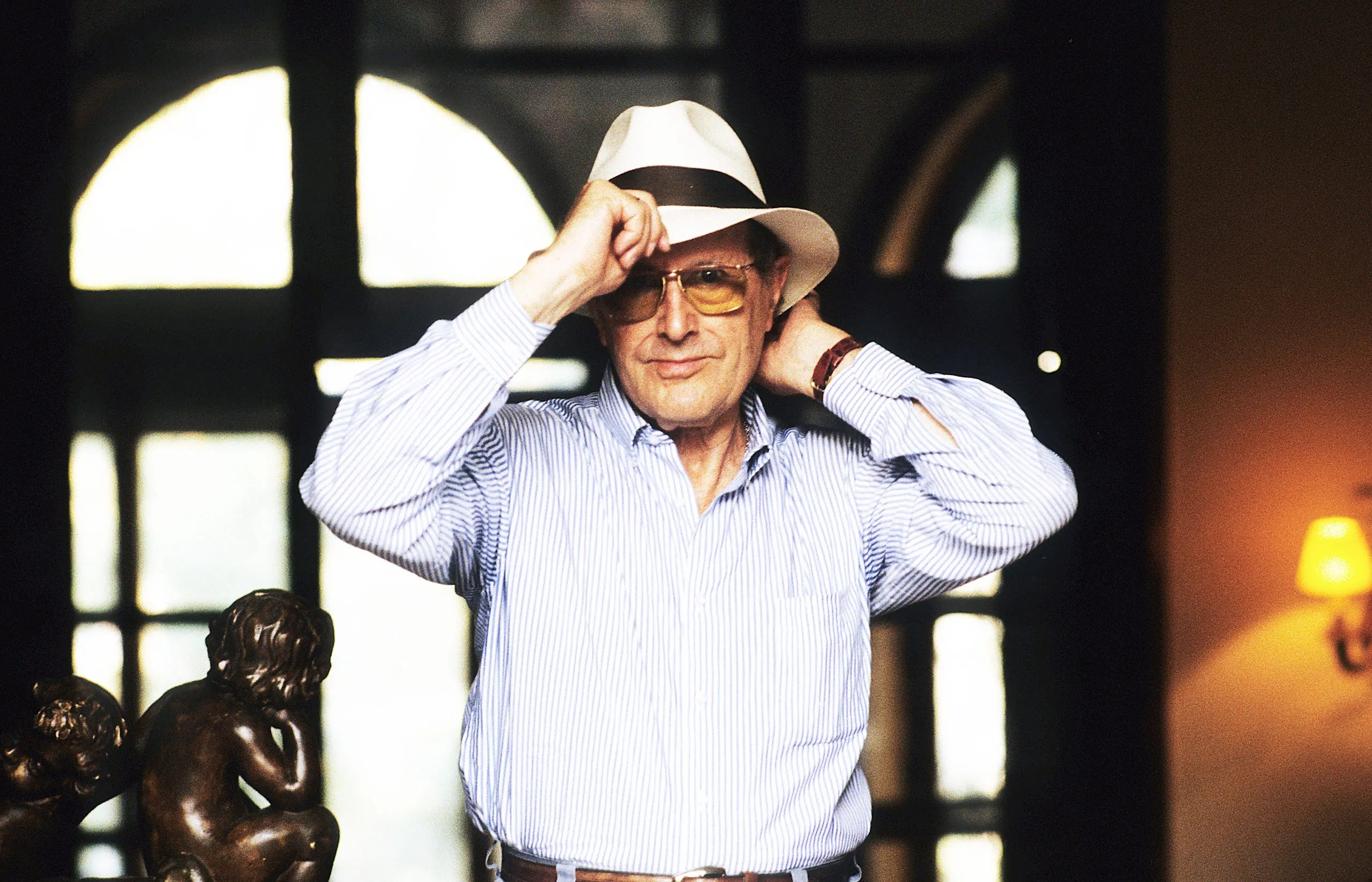
Manoel de Oliveira passed away in 2014 at the age of 106, and he still holds the world record as being the oldest still-active filmmaker in history on the day he died.
And that’s not even his most notable accomplishment! Oliveira directed 31 feature films and an almost equal number of short movies and documentaries...and nearly all of them were made after the man turned SIXTY-SEVEN YEARS OLD.
In case you thought it was ever too late to start.
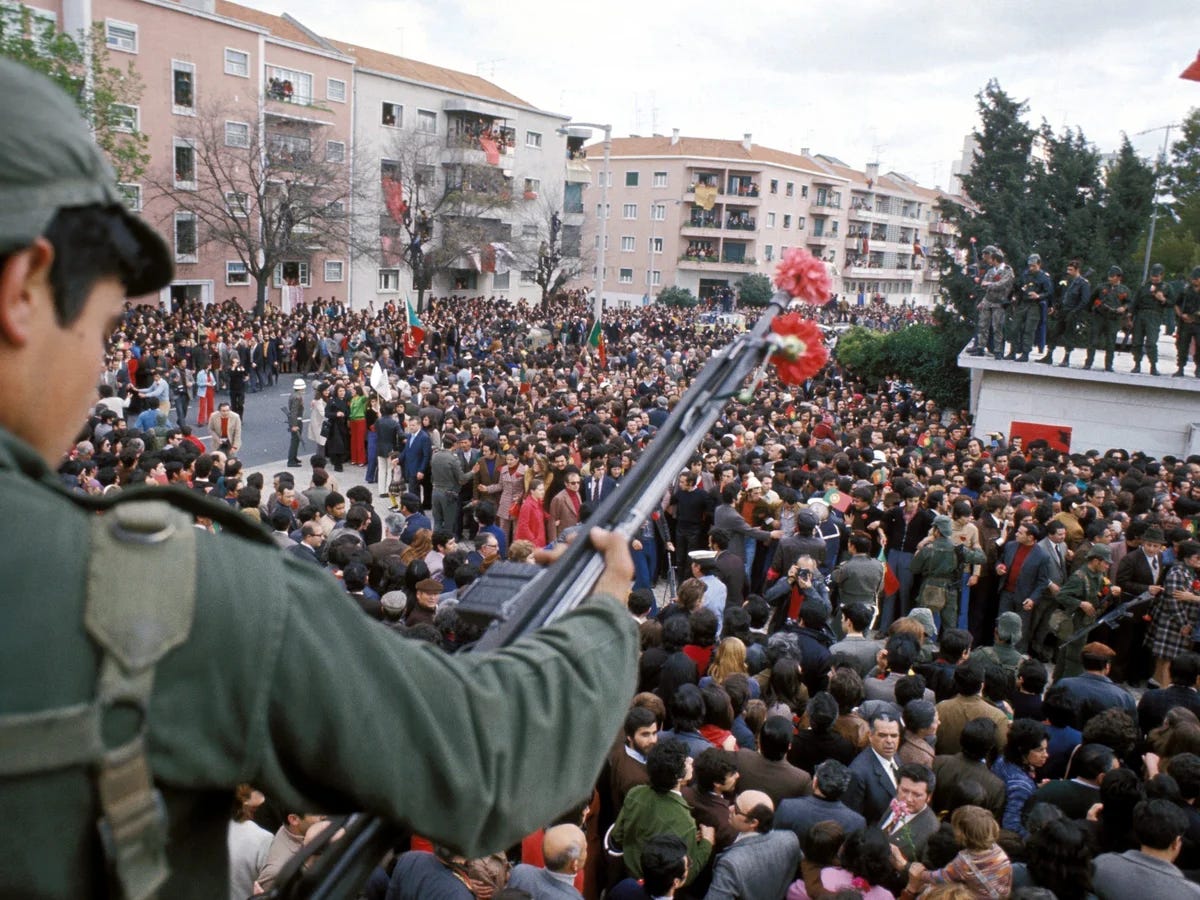
Now, Manoel Cândido Pinto de Oliveira - his full Catholic name - his circumstances were a bit unusual. Being Portuguese in the 1930’s, there was precious little cinematic infrastructure in his home country at the time. And to make matters worse, the authoritarian regime of a different Oliveira - António de Oliveira Salazar - began in 1932 and continued unabated until 1974, when it was finally toppled by a military coup and then followed by The Carnation Revolution - a civil revolt where hardly a single shot was fired, but instead civilians put carnation flowers in the rifles of military personnel. I’m not making this up.
Manoel’s ability to make movies had been almost completely curbed during the Salazar regime, as Oliveira was known to be a criitc of the governnment. He was able to make precisely three feature films before the Revolution, and one of them was after Salazar had already had a stroke, and the regime was already beginning to attempt reforms in 1972. Then, starting in 1975, at sixty-seven years of age, Oliveira’s career exploded and hardly ever slowed.
But let’s rewind, because we aren’t here to cover his entire 31 title filmography. We’re here to begin where Portuguese cinema truly began:
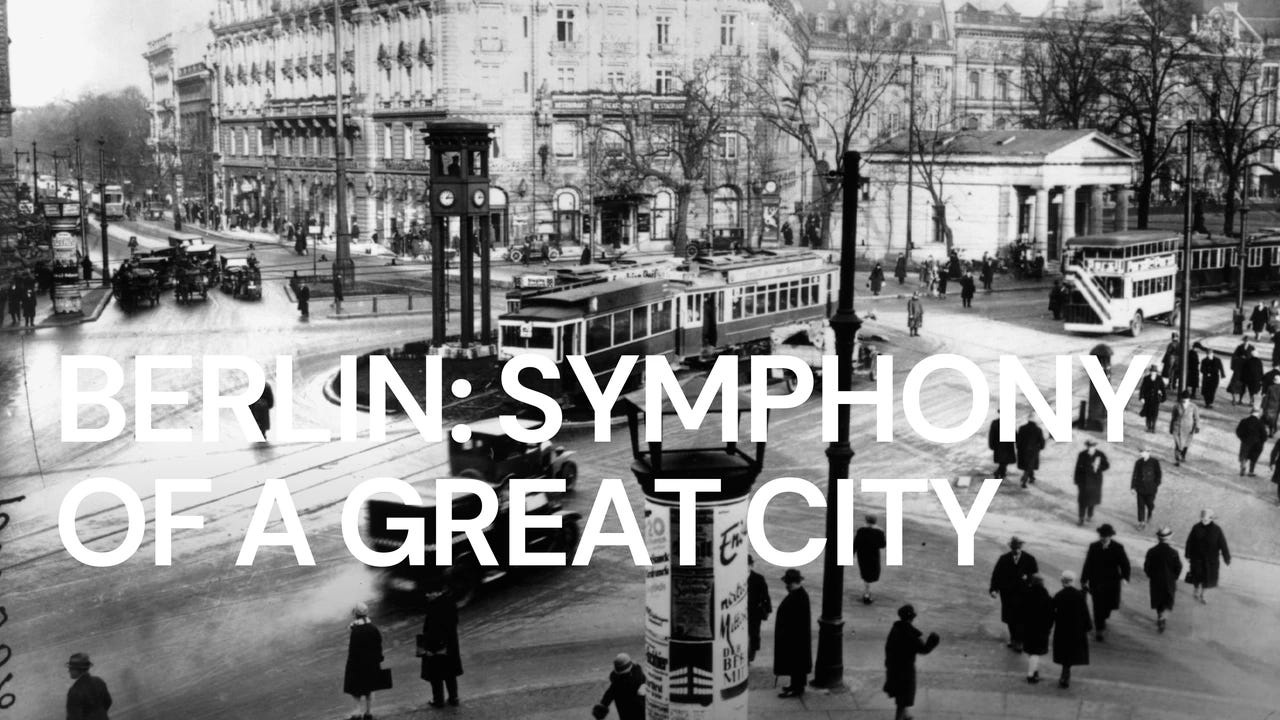
In 1931, Manoel saw Walther Ruttmann’s documentary Berlin: Symphony of a City. Ruttman’s film is the most famous of a small, short lived silent documentary film genre, called “city-symphony film”. These films portray the life of a city, mainly through visual impressions in a semi-documentary style, without the narrative content of more mainstream films, though the sequencing of events can imply a kind of loose theme or impression of the city’s daily life. Oliveira said that Ruttman’s film was his “most useful lesson in film technique”, but that he also found it “cold, mechanical and lacking humanity.”
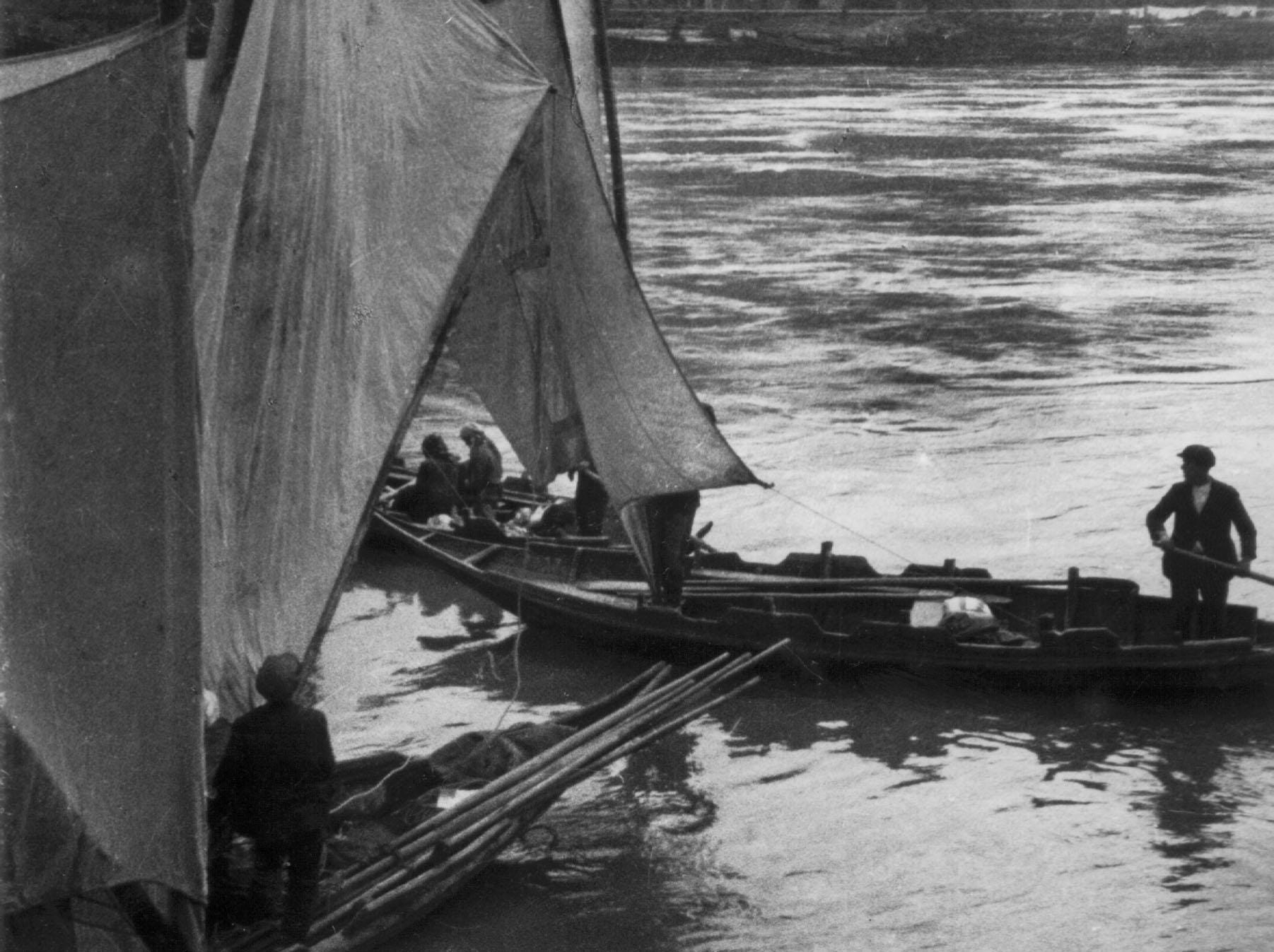
This led to Oliveira directing his first 21-minute short documentary: Douro, Faina Fluvial, a portrait of his hometown of Porto. He was invited to show the film at the International Congress of Film Critics in Lisbon, where the majority of the Portuguese audience booed. This would prove an ongoing reaction to Manoel’s early films from his own people.
Just in case you ever thought you should quit because you’re consistently booed by the audience that means the most to you.
Nevertheless, critics praised the film; but for all the good it did. Oliveira struggled to make another film for over 10 years. His family were wealthy industrialists and agricultural landowners. His father owned a dry-goods factory, produced the first electric light bulbs in Portugal and built an electric energy plant before he died in 1932. At 17, Manoel joined his brothers as an executive in his father’s factories, where he remained for the majority of his adult life when not making films. In a 1981 Sight and Sound article, John Gillett describes Oliveira as having “spent most of his life in business...making films only when circumstances allowed.”
Just in case you thought not being able to make films for 15 year stretches at a time while you worked menial jobs meant you should quit or in itself constituted a crisis. I mean, it does. But tomorrow always comes.
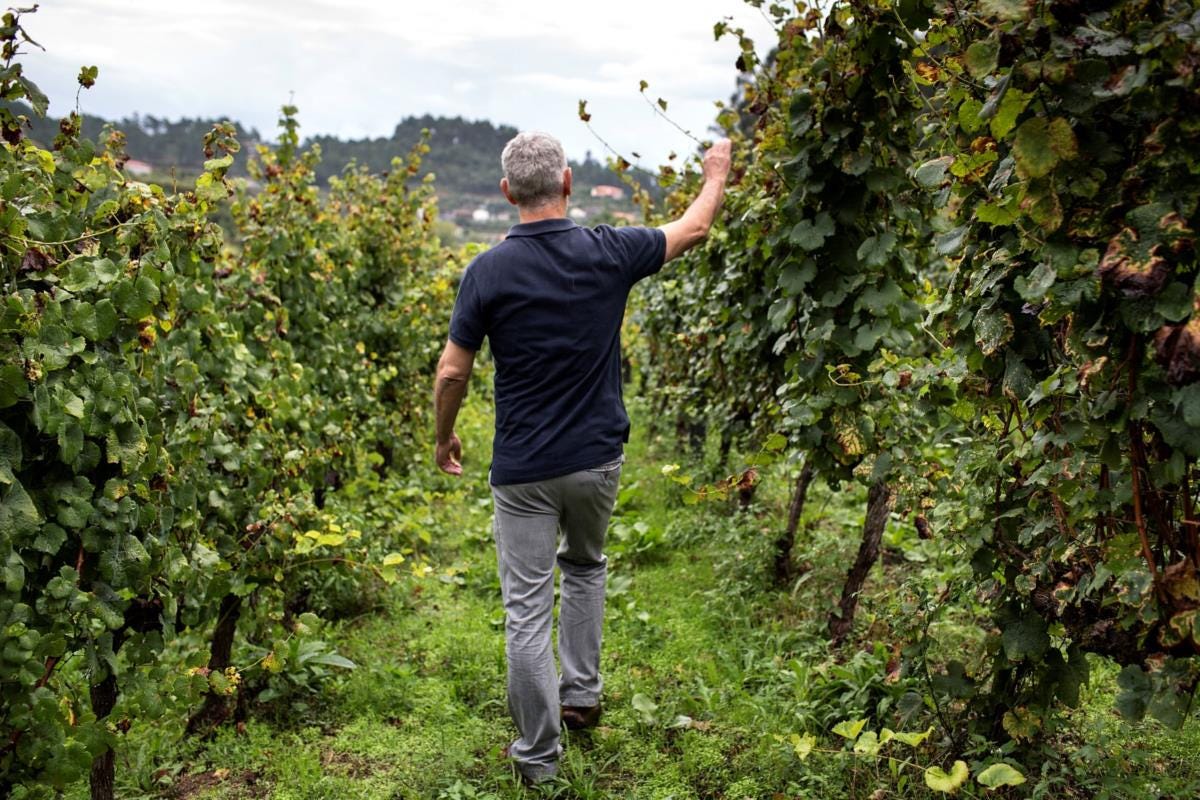
Fifteen years after his first attempt at filmmaking, Oliveira made his feature film debut in 1942. Aniki-Bóbó is a portrait of Porto’s street children and based on a short story by Rodrigo de Freitas. Non-professional actors were cast to portray the children, an Oliveira hoped to captuure the energy and ambiance that he loved about his city. The film was alrgely ignored upon release, and it’s poor reception forced Oliveira to abandon other film projects he was involved in at the time, after which he dedicated himself to work in a vineyard that his wife had inherited.
In case you thought it was ever safe to quit your day job when you’re living through an authoritarian regime. Americans, I’m looking at you.
But time has been kind to Aniki-Bóbó, which today is considered:
“A landmark precursor to Italian neorealism, Aniki-Bóbó is a children’s film shot with non-professionals and meagre means in de Oliveira’s native Porto under the shadow of both the Second World War and the stifling Salazar dictatorship. Its incantatory nursery rhyme title refers to a children’s game in which authoritarianism is pitted against rebellion and freedom — the film’s underlying theme.” —ANDRÉA PICARD from the Toronto Interntional Film Festival, to celebrate Aniki-Bobo’s new restoration, now avilable to all.
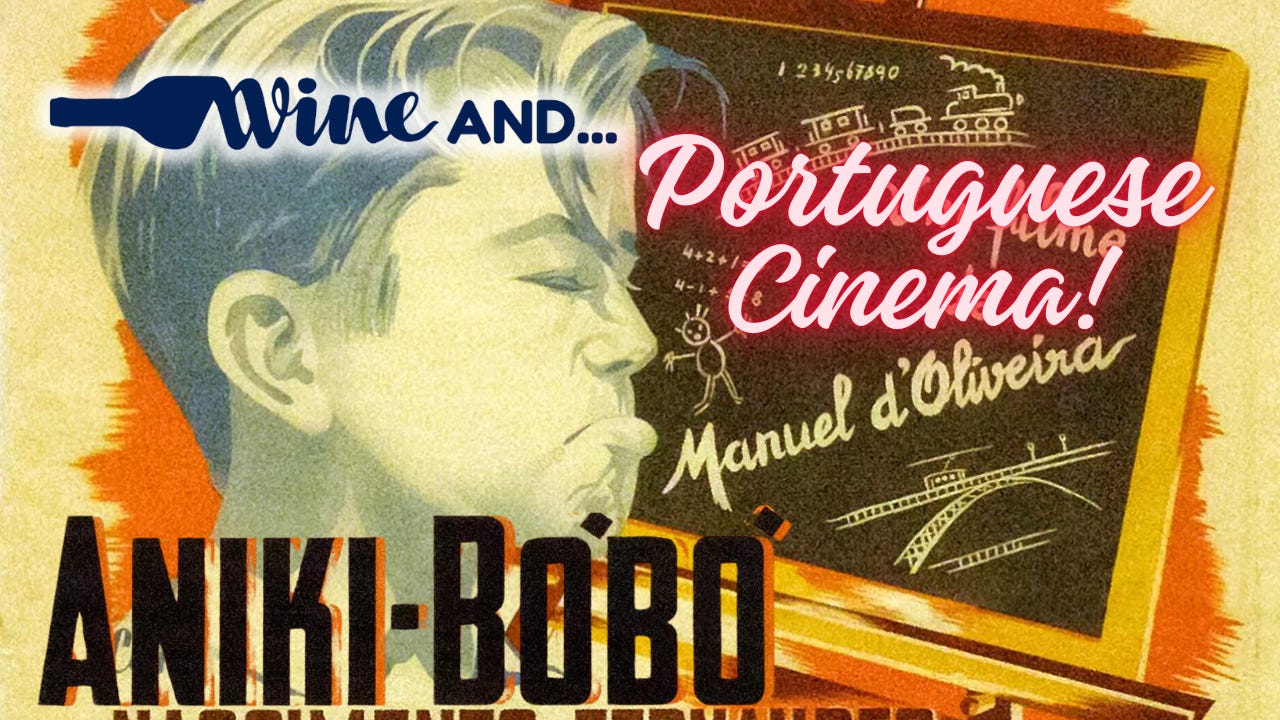
And ANIKI-BOBO, the 1942 debut feature of Manoel de Oliveira is what we discuss in today’s episode folks. I just took my first trip to Portugal, and to celebrate, we had to watch our very first Portuguese movie, which is also pretty close to being the first narrative Portuguese feature film of note in the country’s history.
So please give it a listen! Either above or on your podcast platform of choice.
The Liqueurs
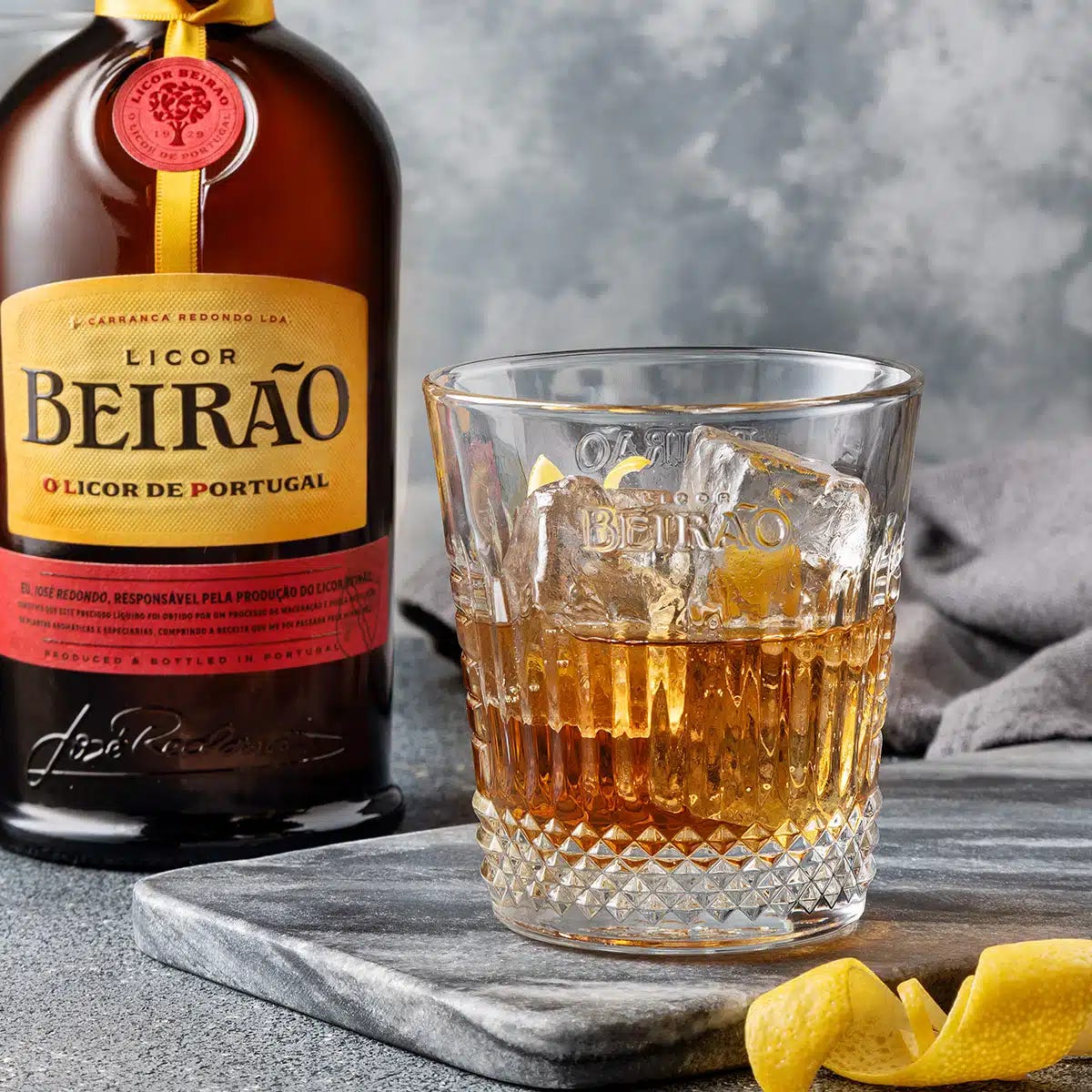
Licor Beirão, simply known as Beirão (Bay-rao), is a Portuguese liqueur from the Beira region of Portugal. Originating in the 19th century, it is the most consumed alcoholic spirit in Portugal. And it is phenomenally good.
I tried it for the first time in Portugal, annd brought a bottle home. Dallas tried it and immediately declared it “a problem”. There are stores that will ship in America, and/or see if you can find some for yourself wherever you are!
Production of Beirao began in the 19th century in \Lousã, in the Beira region, from where it got its name (Beirão means “from Beira”). It is made from a double distillation of seeds and herbs, including mint, cinnamon, cardamom and lavender, from all over the world, including former Portuguese colonies of Brazil, Sri Lanka, and India.
Much like other “aromatic” licqueurs steeped in roots, seeds, herbs, and spices such as Vermouth, Beirao was originally produced in the 19th century as a medicinal product for stomach aches. In the late 19th century alcoholic beverages were no longer qualified as medicinal but the liqueur was kept in production in a small factory owned by the son-in-law of the original producer. In 1929 the liqueur entered a contest on the 2nd Beirão Congress where it earned a gold medal and its name of Beirão.
The liqueur is still produced and bottled at Quinta do Meiral, according to the original secret recipe, by double distillation of 13 different aromatic seeds, herbs and spices. After being weighed out and mixed, the plants and herbs are mixed with alcohol, and remain in maceration for a minimum of about twenty to twenty five days. The resulting contents are then twice distilled in copper alembics.
The use of natural plants and herbs is one of this liqueur’s main distinctive factors, since it doesn’t make use of essences and artificial aromas — rather, the aroma used is produced locally, an alcoholate made from the base ingredients. Once the alcoholate is ready, it is then added into a mixture of alcohol, sugar and water. This mixture is then tested to ensure it fits the secret recipe’s parameters.
A punch line used in its advertising in the 1960’s, O Beirão que todos gostam (”The one from Beira which everybody likes”), had a subtle reference to their authoritariian ruler, António de Oliveira Salazar, who was “the one from Beira which not everybody likes”.
The ideal way to drink Beirao is over ice (one medium to large ice cube, if possible) and a twist of lemon, squeezed to add its oils to the liquid. It’s sweet (but not too sweet!), and bursting with Sasparilla-like flavors, then the lemon twist will add a zip of brightness. It perfectly matches the energy of the children and the film itself, while remaining complex in total flavor profile, easy yet deep, immensely pleasing, just like ANIKI-BOBO.
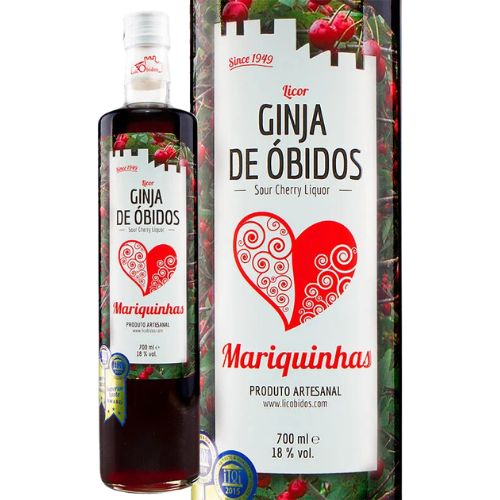
Dallas selected another Portuguese liqueur, this one traditional to the region of Obidos, made from that tart/sour Ginja cherry indigenous to Portugal. Typically referred to as “ginginja” (get it? GIN-Ginja!) this is a deep, luscious cherry liqueur, sweet yet tart, and once again “a problem” / “dangerous” in Dallas’ estimation. Listen to the episode where we downs a third of the bottle while we’re recording!
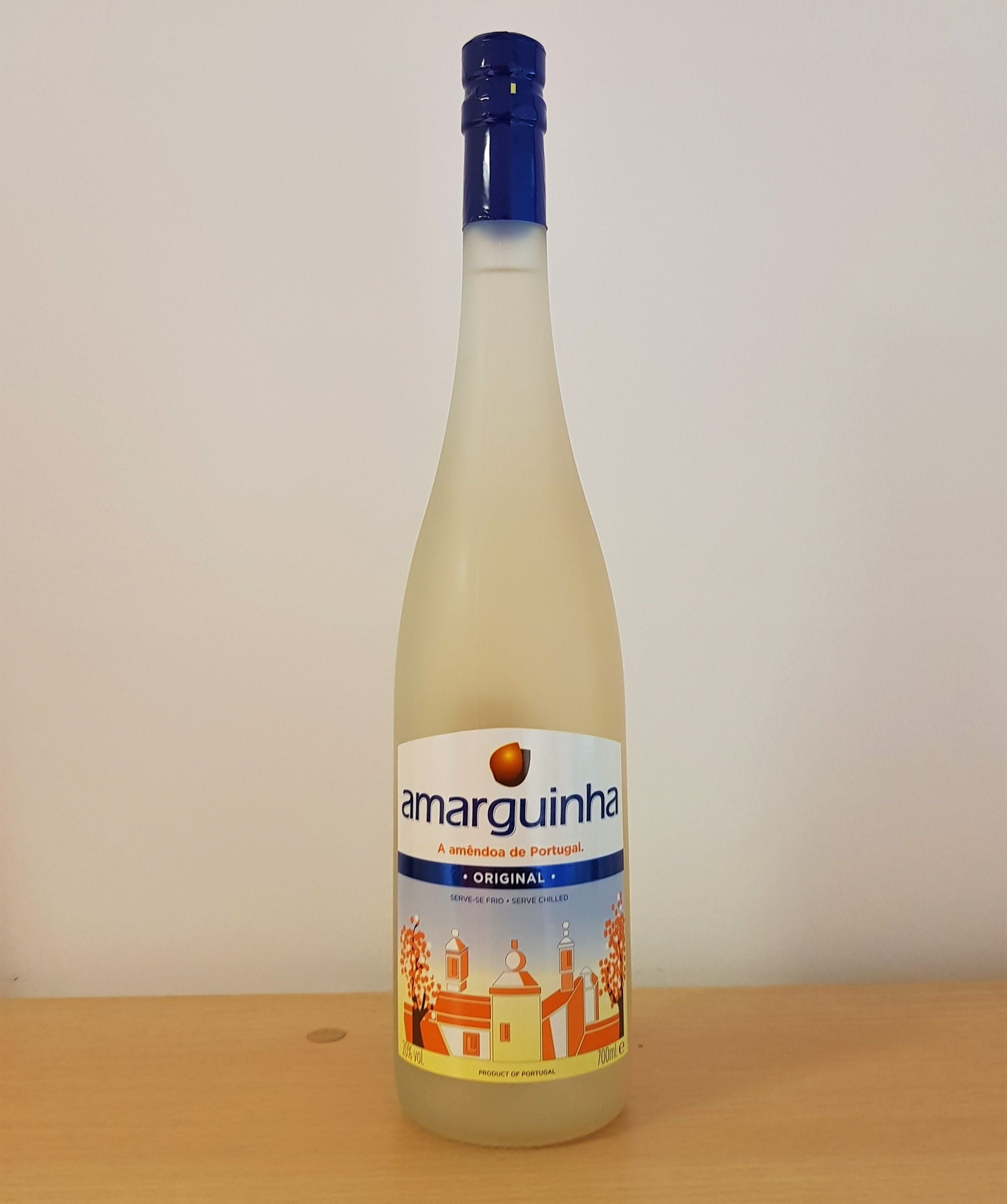
And there is also a third Portuguese liqueur that could fit ANIKI-BOBO - their almond “Amarguinha” (Am-are-gween-ya). Similar to Amaretto but more balanced, not quite as sweet, and a deeper pure almond flavor. Do yourself a favor and search for any/all of these!
And yes, I know it’s wild we didn’t pair a single Portuguese wine with this first Portuguese film! But my next TWO pairings in the next two episodes will both feature Portuguese wines, so those recommendations are coming!


