Lam Ngai-Choi (aka Lam Nai-Kai) was regarded as one of the best cinematographers at Shaw Bros Studio in the late 70’s / early 80’s.
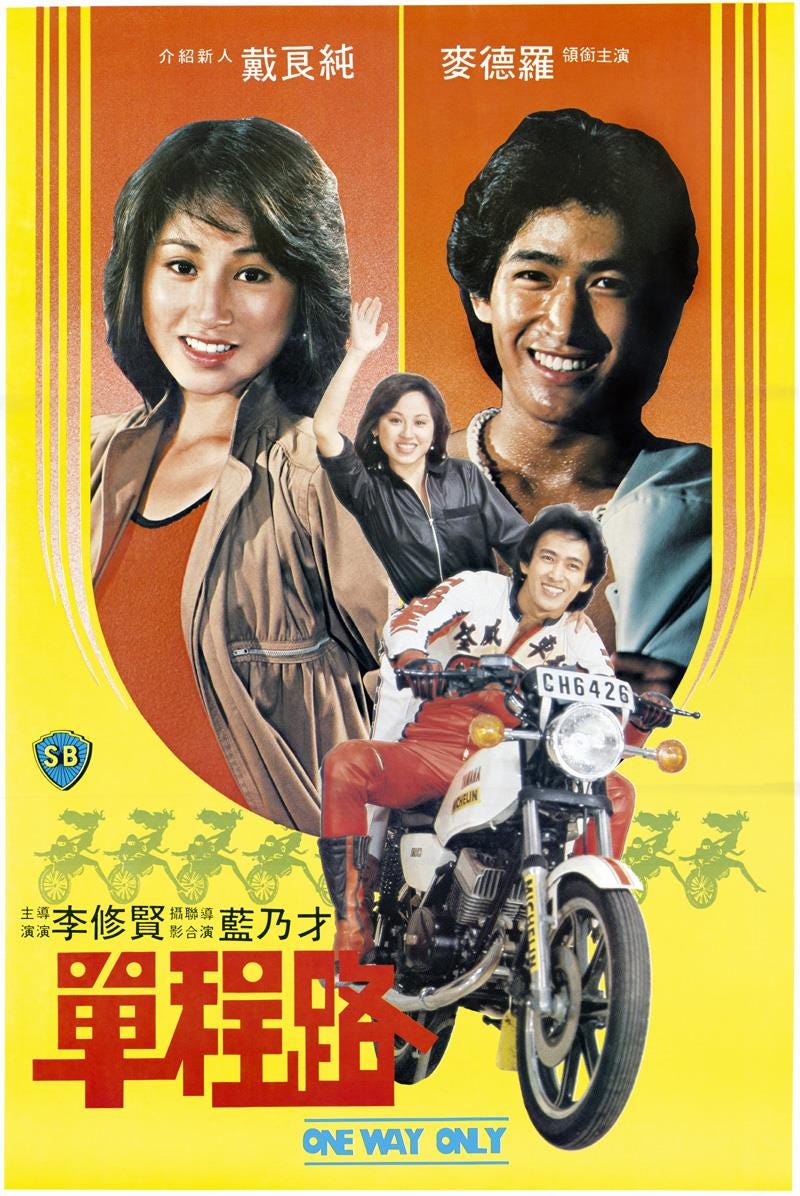
Yet despite encouragement from the studio, as well as from of such landmark talents as Tsui Hark and Sammo Hung, Lam turned down opportunities to become a director until actor Danny Lee - mega-star of John woo’s THE KILLER and Ringo Lam’s CITY ON FIRE - invited Lam to co-direct One Way Only in 1981, which became the first directorial work for both of them.
Lam’s first film as solo director was the crime drama Brothers from the Walled City in 1982 which he followed with an even more refined and progressive urban thriller Men from the Gutter in 1983, both produced by Shaw Brothers. Even though Lam is not considered part of the Hong Kong New Wave of the turn of the 70’s and 80’s, these two films display an identical approach to the films of Dennis Yu or Johnny Mak, the core difference being that Lam was not an auteur in the classical sense, meaning he was the director and cinematographer of the films, but not the author of the script.


Nevertheless, Brothers from the Walled City and Men from the Gutter, just like the contemporary HK New Wave films, combined popular genres with personal drama, their characters and conflicts grounded in the everyday social reality of Hong Kong and they were filmed on actual locations, not just studio sets. (As was the norm prior to.)
In 1984, Lam directed the comedy Three Stooges Go Undercover, which was written by the legendary Wong Jing, who is also credited as the author of the original story of Lam’s previous comedy, One Way Only. Lam’s cooperation with Wong - who later became one of the most influential writers and producers in Hong Kong cinema - continued with lensing Wong’s two directorial projects Prince Charming (1984) and The Flying Mr. B (1985). In 1985 both Lam and Wong left Shaw Brothers for Golden Harvest - the studio where Jackie Chan and Sammo Hung now resided - where they continued their collaboration with Ghost Snatchers in 1986 and The Seventh Curse in 1986. Both films were written by Wong Jing, the first one with him in a starring role and the second produced by him. And these films marked a new direction in Lam’s career.
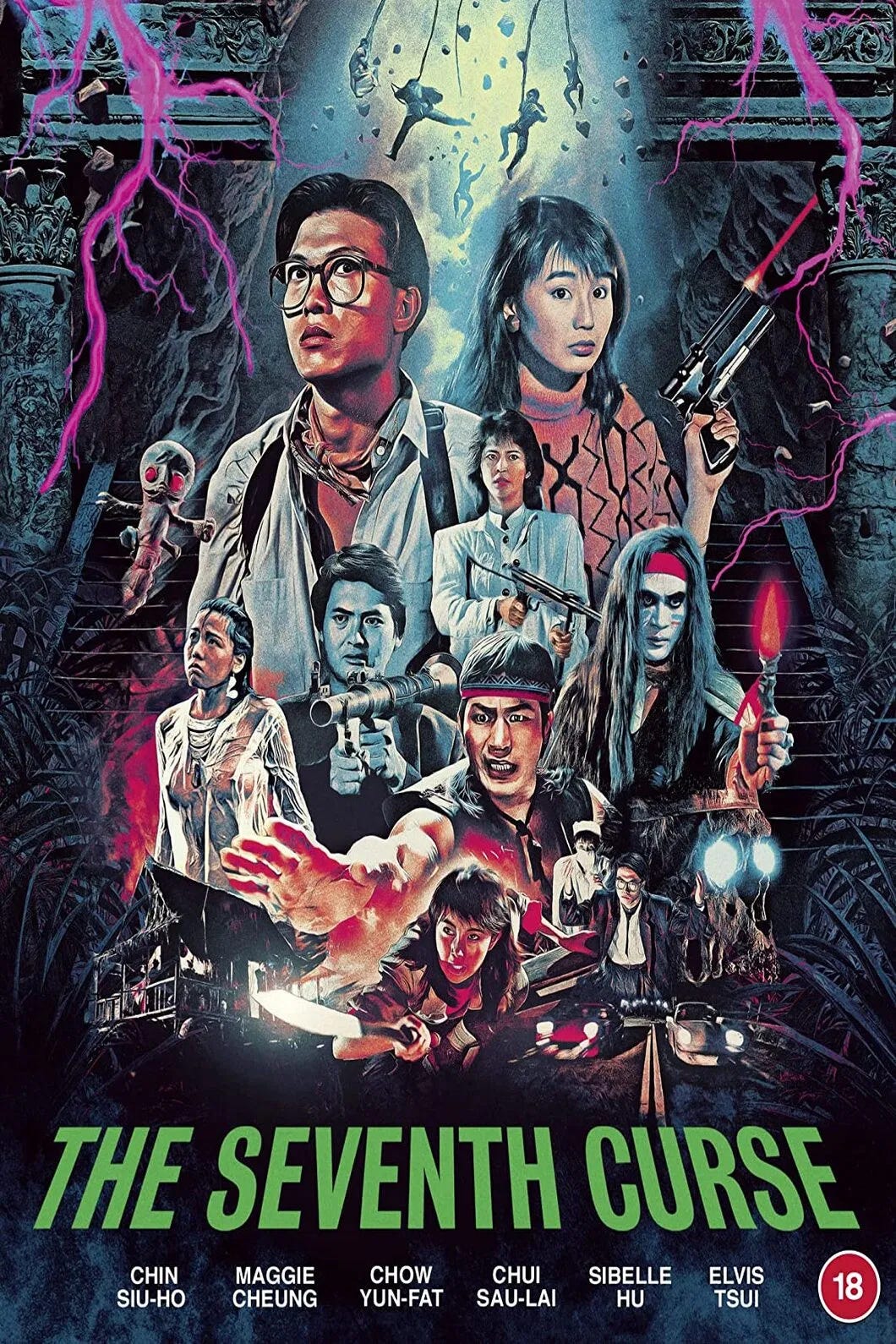
The Seventh Curse in particular was the first in a series of gonzo adaptations of the “Wisely” novels. (Also sometimes called the “Wesely” novels, which I think was the intended name, though “Wisely” for some reason became the more common translation!) Or actually, Seventh Cursse was an adaptation of author Ni Kuang’s Dr. Yuen series of which Wisely was a supporting character. Then Wisely began to star in his own novels, an insane 161 stories in 156 novels, to be exact! In the movie, Chin Siu-Ho plays Dr. Yuen, while Chow Yun-Fat plays Wisely. The film is part Indiana Jones adventure, part horror, part martial arts action spectacle, and would cement Lam as the go-to director for films heavy with mechanical and optical special effects.
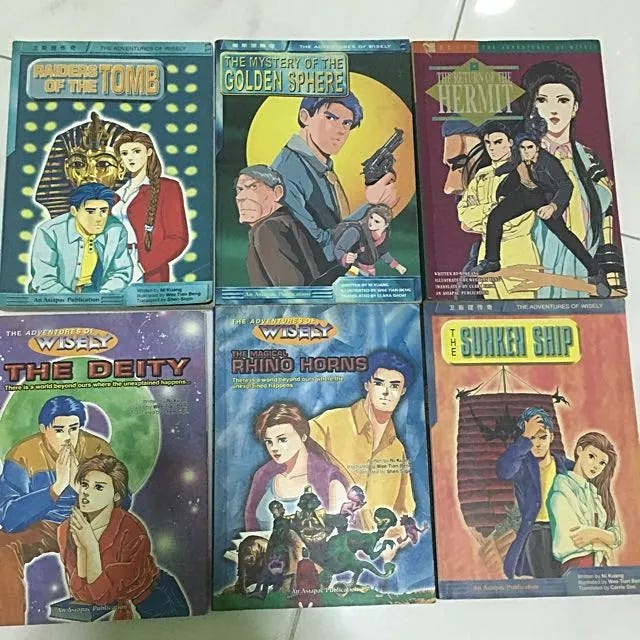
It should also be noted that author and screenwriter Ni Kuang was an adamant anti-Communist and anti-Authoritarian. While the most prolific writer in HK during the 70’s and 80’s, he left China and HK before the handover and vowed never to return. When Jackie Chan honored him in recent years after Ni Kuang’s passing, Chinese “Netizens” - likely government-run online accounts - scolded him for praising such a demoniac person.
In 1987 Lam directed Killer’s Nocturne, an epic revenge drama set in the gambling milieu of old Shanghai and written by Manfred Wong, the later writer and producer behind the immensely popular Young and Dangerous series. The film is infamous for the INSANELY NOT-P.E.T.A. APPRROVED scene where a man actually boxes a kangaroo. He gets his ass handed to him, handily, but it’s still an unfomfortable sceen to watch.
In 1988 Lam paved the ground for the infamous CAT III - or “Category III” - exploitation boom with his rape and revenge movie Her Vengeance. Another milestone in his filmography is the historical erotic comedy with fantasy elements Erotic Ghost Story in 1990, which kick-started the whole stream of copycat erotic films with historical/fantasy settings starting as the Sex and Zen series in 1991. At the same time Lam directed two spectacular adaptations of Makoto Ogino’s manga series Spirit Warrior – Peacock King in 1988 and, at least partially, though he was fired part way through, Saga of the Phoenix in 1990, both starring Yuen Biao and Gloria Yip.


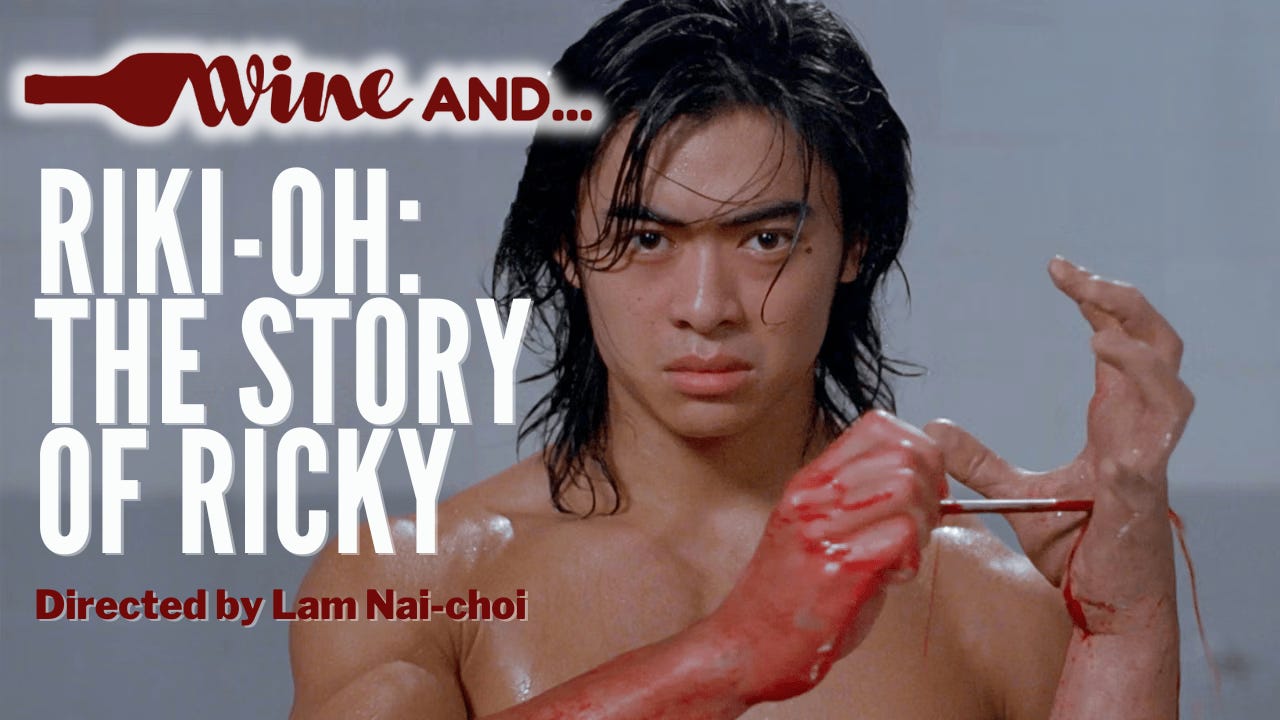
Lam’s most notorious film, however, is them movie we’re here to talk about today: his 1991 over-the-top gorefest RIKI-OH The Story of Ricky. Meticulously true to its source manga material - so much so that the original trailer for the movie has shots of the film lined up with panels from the comic!
This adaptation of the violent manga Riki-Oh by Masahiko Takajo and Tetsuya Saruwatari combines both then-current trends in Lam’s filmography: 1) high concept adaptations of Japanese comics, and 2) hyper-violent exploitation films abundant with bodily fluids. And the film spotlighted the anxieties of the early 90’s: foreign capitalist modalities forced upon a people, the loss of freedoms, the need to fight - violently so - to push back against such inhumanities.
Even though the film later gained cult status in botht he East and West, it did not perform well in local cinemas. It was the first film to receive a CAT III rating due to violence alone, and local adult audiences shunned it. It grossed only HK$2.M, whereas Lam’s previous films for Golden Harvest usually grossed around HK$8 to 10 million.
Then RIKI-OH found its audience when it hit home video: kids that couldn’t see it in theaters!
Yet despite this late success, Lam’s last film to date was The Cat aka THE THOUSAND YEAR CAT in 1992, just one year after RIKI-OH, an hallucinatory mixture of action, horror, comedy and science fiction that was another adaptation of a Wisely story. And this one, more than any other, was fully preoccupied with the handover - the year 1997 is spoken of prominently, with an alien force invading the very beings of the HK people. And as with all Lam Nai-Kai movies, the effects and storytelling are absolutely over the top and gonzo.
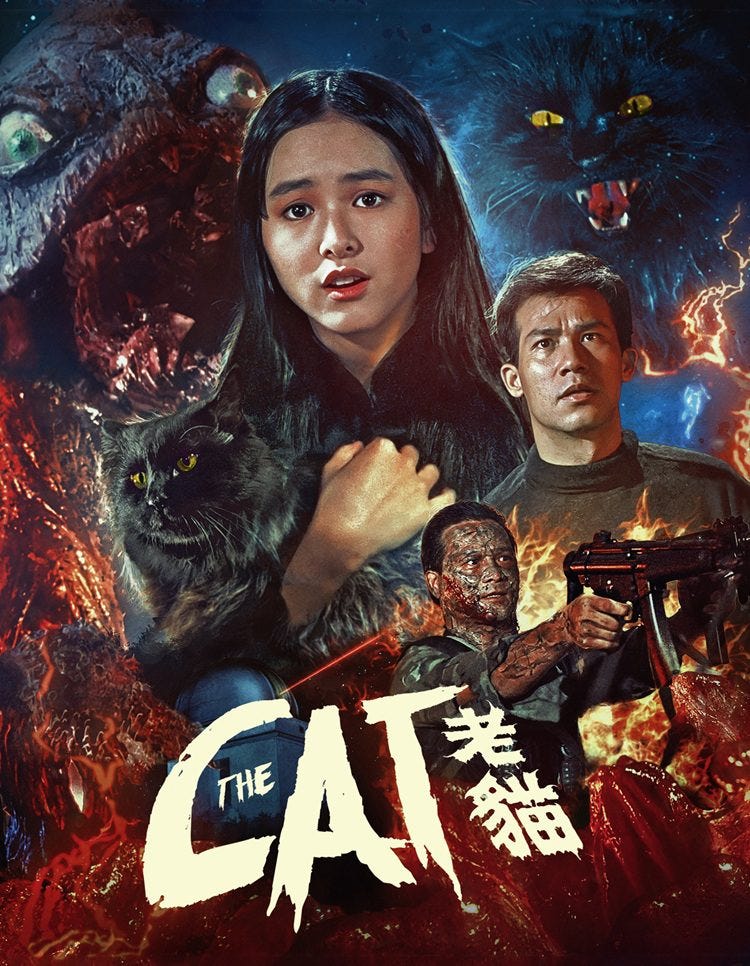
Sadly, after THE CAT, Lam Nai-Kai disappeared from the film scene, for reasons that are still undocumented, and has yet to return. Even though his films are currently undergoing a significant Renaissance on blu ray and 4K, finding whole new generations of fans across the globe.
So with that said, strap in, grab a glass of wine or your beverage of choice, and let’s talk about the first film of Lam Nai-Kai’s that landed with Western audiences and helped open the door to his films receiving the wider recognition they’re appreciating today.
Bonus Clips Cut From the Main Episode
Once Upon a Time We Remebered Phone Numbers
How to Curse Without Offending. (Maybe.)
Now I Want Actual Wine Peeps (Plus: Fermenting Peeps)
Did you know I actually did a Wine and Peeps Pairing a couple of Easters back? Well, I did:
The Ultimate Wine and Peeps Pairing

Easter is almost upon us, and I will brook no argument on this point: Peeps are the GOAT when it comes to Easter candy.
The Wines We Paired With RIKI-OH
DALLAS: This is a film of fever dreams. It feels like something I would have written, especially act three, if someone had come to me and asked me to write a third act that leaves the audience scratching their heads wondering, “I don’t know what the hell i just watched but I’ll take another glass please?”
And for me, the experience of Shiraz is like a kick of black pepper coming through a refined jam. And that’s what this film is. The filmmakers are obviously seasoned and refined but the brutal, assaulting kick of the gore and stunts just slaps you around or punches you through the face, to reference one of the greatest action sequences in history which is in this movie.
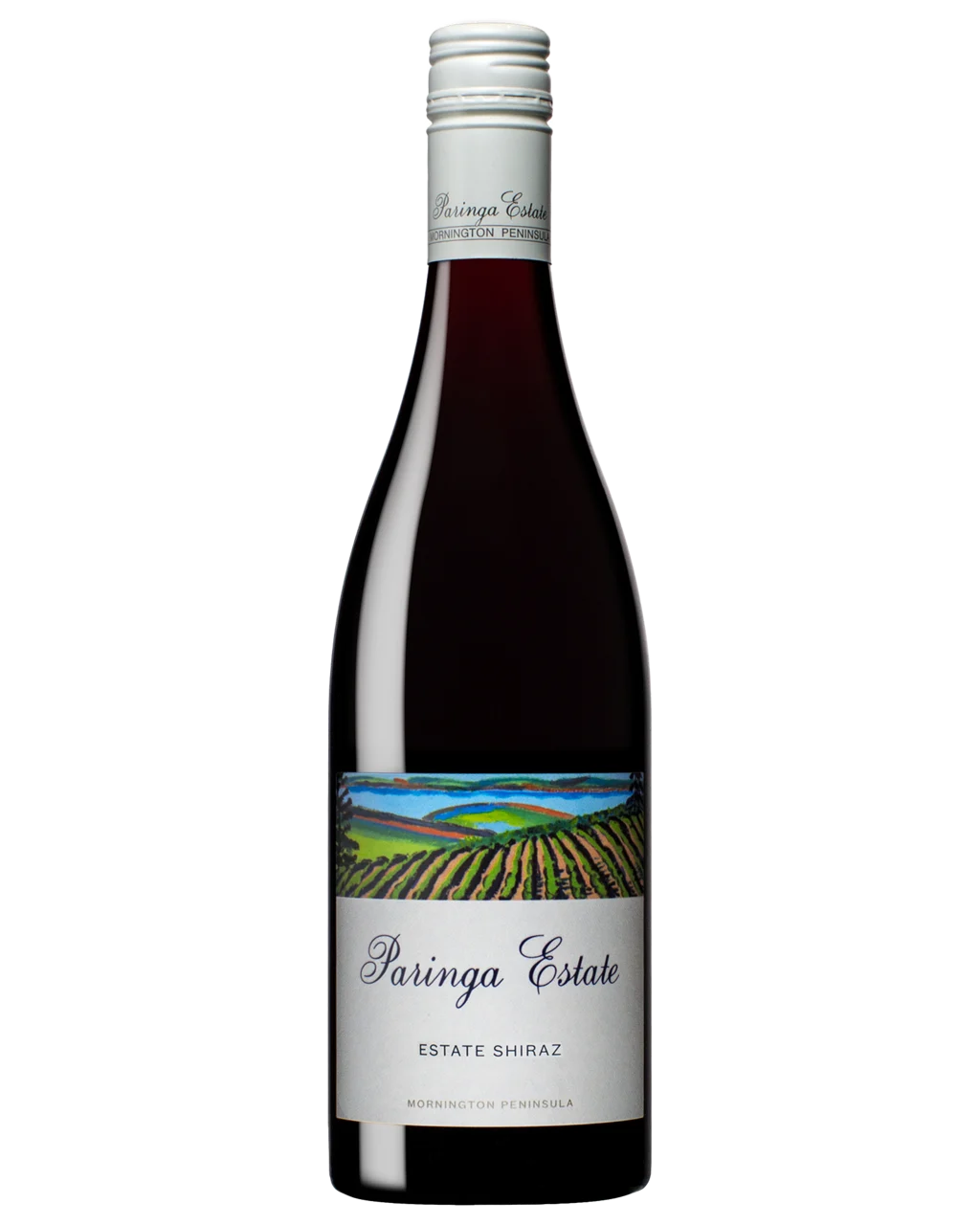
So for that, I went with the 2020 Paringa Estates Mornington Peninsula Shiraz. (A cool play on words as the full name of the area is “Mornington Peninsula Shire” so turn “Shire” into “Shiraz”!) It’s wonderfully Jammy, cool climate expression of a Shiraz with a fairly subtle peppery note. It’s not very heavy. And at 5 years old it feels elegant. There’s also this faint note of forest floor that’s kind of reminiscent of that earthy smell you find in blood.
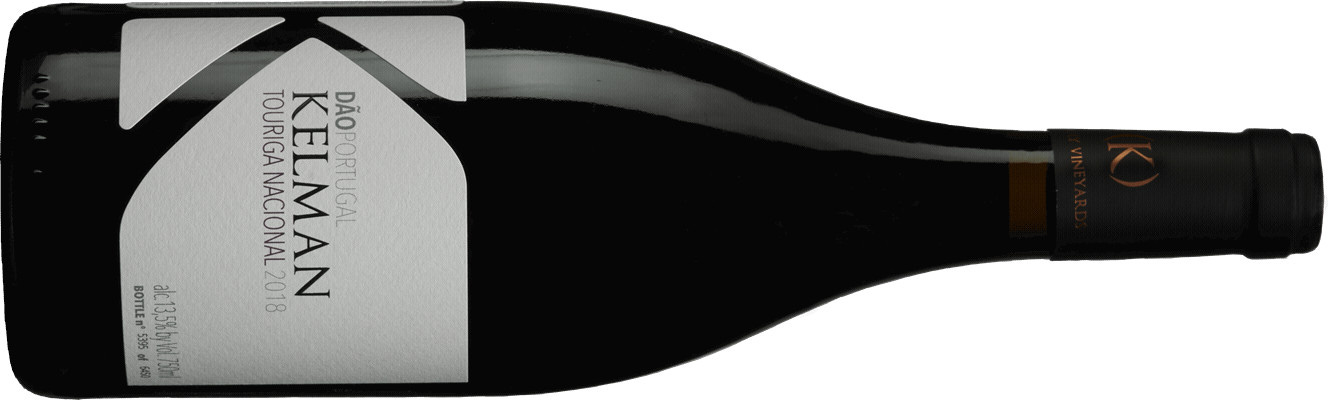
DAVE: Speaking of blood, let’s talk about Touriga Nacional from Portugal! The 2018 Kelman Touriga Nacional, Dao, Portugal to be precise.
The primary grape used in Port production, and considered by many to be Portugal’s finest grape. Thick skinned, with dark pigments, resistant to humidity and disease, it’s perfect for the hot humid climates of the Douro (where Port is made) and the Dao - where this particular wine is made.
Touriga makes a very deep colored, almost black red wine, but with silky tannnis, especially when there’s 8 years of age on it, like with this 2018. Black plum and prune, tobacco leaf and wet wood, damp earth and a raw meat tang on the finish. It’s bloody and raw, yet silky smooth, like this movie.
And like this movie’s protagonist, Ricky, Touriga Nacional is working hard to free itself from its current confines and break free into the wider world. DINIZ CELLARS sells this wine in California, and can ship to many States in the USA!
Th-th-that’s all for this week!
Join us and Avi Setton next week, when we cover a NonDe / indie documentary that needs a lot more attention than it’s getting - LISTERS.