


OUR 75TH EPISODE!!!
To celebrate, we’re joined today by comedy screenwriter Carrie Freedle (Afterlife of the Party, The Holiday Calendar), who we met at our recent in person Halloween Wine and Movie pairing in Los Angeles! (see what you miss when you don’t come to our shindigs?)
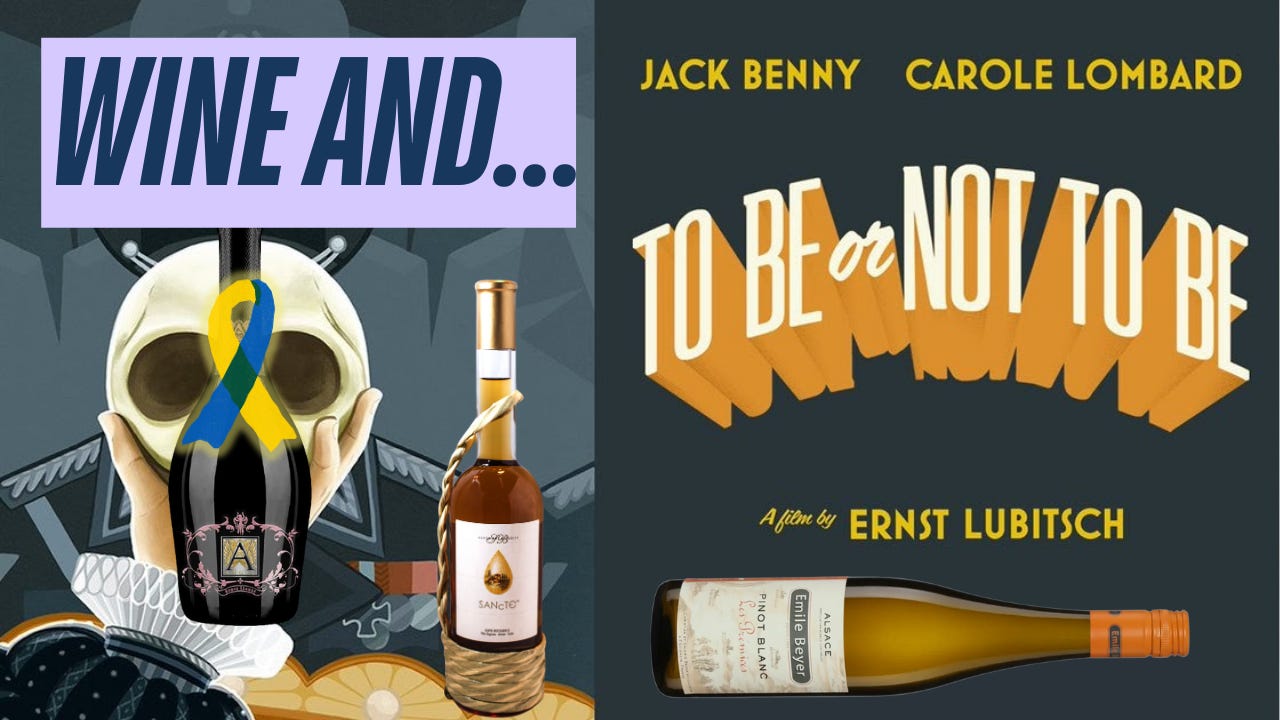
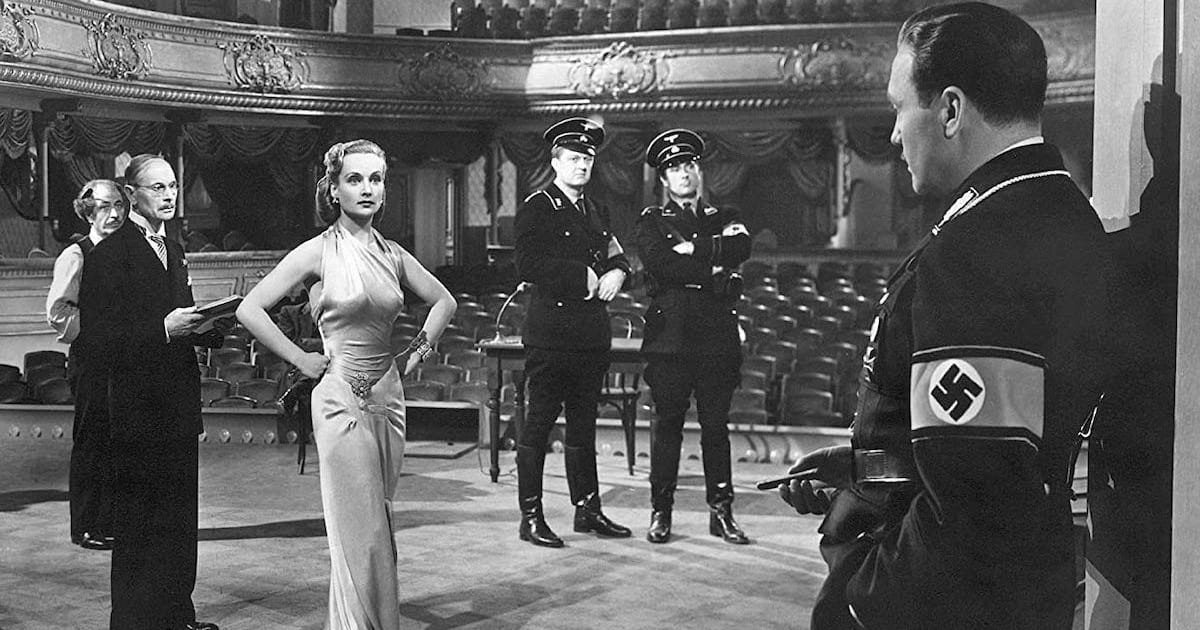
Carrie wanted to talk about one of her favorite comedies: 1942’s TO BE OR NOT TO BE by Ernst Lubitsch and starring Jack Benny and Carole Lombard (in, shockingly and sadly, her final role.) I’d never seen the film - though I had seen the Mel Brooks remake from 1983. And Dallas hadn’t seen it in a long time, so this was a perfect mix of perspectives!
And folks, our takes were unanimous: this movie is INCREDIBLE. A World War II satire taking place during the invasion of Poland and released in 1942 - while we were still in the thick of the war. As I say on the podcast: it’s like if someone made a dark comedy about ICE raids right now. And it was authentically funny. Do we laugh? Is it okay to laugh? Critics at the time were torn.
Though the film’s reputation has done nothing but grow since then. The humor is pitch perfect. The horrors equally so. It pulls no punches while nevertheless delivering the gags. It’s something to behold.

Wine Trivia Question of the Week
Our movie today takes place in Poland. And Vitis vinifera - the species of grape most associated with wine in Europe - was discovered to have been present in the country since which time period?
Vitis vinifera has been in Poland since...
A) The Middle Ages (circa the 5th to 15th centuries)
B) The Bronze Ages (circa 3200 BC)
C) The Holocene Era (circa 11,700 years ago)
D) The Miocenne Era (circa 5 - 23 million years ago)
Choose your answer - no take-backsies - and we’ll reveal the answer in 3...2...1...
Did You Know…
We mention how much of a misfire the 1983 Mel Brooks remake was to all of us, even though we all love Mel Brooks! And that led us to this discuss this fascinating anecdote about the Greeks:
Choose Your Own History
Actress Carol Lombard wasn’t the first choice for the lead role of Maria Tura. She replaced superstar Miriam Hopkins, and we read multiple differing accounts for how that came to be.
One source stated:
“Lubitsch had originally cast Miriam Hopkins in the role of ‘Maria Tura,’ but when Hopkins displayed dissatisfaction with the role, Carole Lombard urged her to withdraw, and was subsequently cast in her stead.”
Another stated:
“Miriam Hopkins was the original choice for Maria Tura, but she turned down the role when she realized Jack Benny got all the laughs and she would be working as his straight man. Hearing of Lubitsch’s predicament, Lombard asked to be considered for the part, seeing the overall quality of the material, despite the controversial subject matter. It also gave her a chance to work with the acclaimed director, whom she long admired. It also gave her the opportunity to work alongside her friend Robert Stack, whom she had known since he was a teenager. And though Benny played the lead character, Lombard received top billing for To Be or Not to Be.”
And yet a third source stated:
“...but radio star Benny, thrilled to be in a film directed by Lubitsch, was less enthusiastic about working opposite the temperamental Hopkins. The director complied with Benny’s wishes, replacing Hopkins with Lombard, who had long wanted to work with him. Carole also agreed to provide production money in return for part of its profits...which, as we all know, she never got to see.”
Which is the truth? Nobody knows! So pick your favorite version of history and run with it!
The Wines
Dallas’ Wine

Sante Bucciarelli Sancto Liquoroso, Italy
DALLAS:
I thought this film was a meditation on comedy and perhaps unchecked ego. It’s very tongue-in-cheek, and I think it’s light but intense. And sweet in its own way. It stands the test of time and I doubt anyone’s ever truly thought of this film as bad.1
And so, I wanted a wine that was precisely this. Not to mention the Shakespeare connection as The Bard was known to toss in a reference or two about sherry or fortified wines…
So I went with a desert wine.
A Vin Santo or Holy Wine is a traditional Italian Sweet dessert wine from Tuscany. The grapes are dried to concentrate their sugars before fermenting and aging them for at least three years, then it’s stored in chestnut oak or acacia barrels.
A quirk of this class of wine is the use of the “madre” or “mother” which is a byproduct of fermentation and the aging process. It is the sediment which collects at the bottom of the barrel, containing bits of grape material, dead yeast (aka “lees”), bits of oak material, some wine (the liquid), and whatever dropped out of suspension during the aging process. And since the mother is used continually batch after batch, it becomes, essentially, a concentration of all the madre’s before it.
This is the Sante Bucciarelli Sancto Liquoroso. It’s light but intense with dominant notes of almond, honey, dried currant or raisin, and nutty notes.
The grapes are a blend of Grillo, Catarratto, Bianco and Inzolia, 16% ABV.
Carrie’s Wine
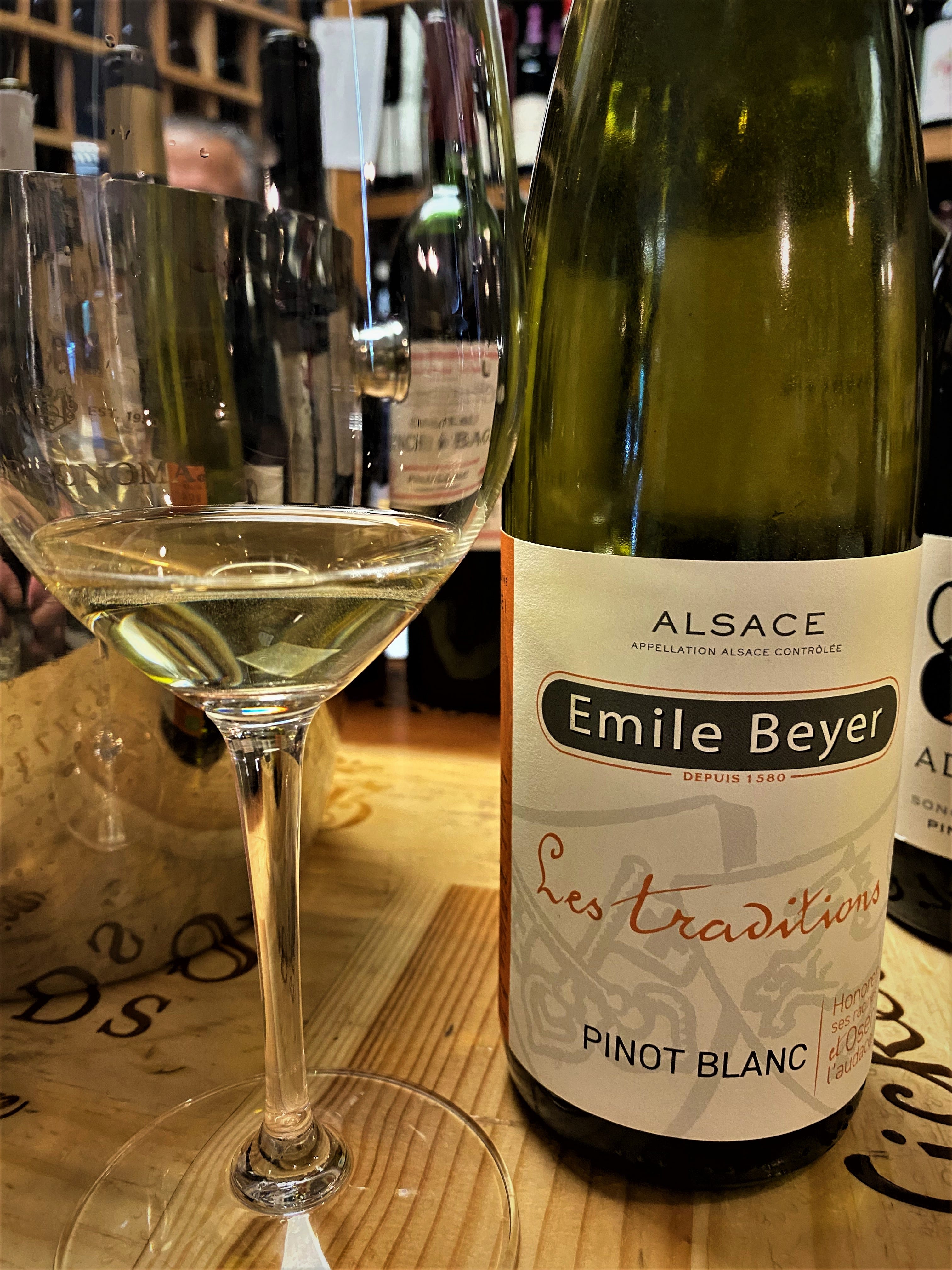
Emile Beyer “Les Traditions” Pinot Blanc, Alsace
As the film revolves around the Nazi invasion of Poland, Carrie tried to find a Polish wine, but there really aren’t any in America in 2025, at least none easily accessible. So she looked to history to find something comparable.
And she fell on Alsace: a region that once belonged to France, but when the Nazis invaded and annexed it in 1940, they wiped everything out and made it a part of the Third Reich.
She wanted something crisp to match the winter setting, and something light and fruity to match the comedic aspects, which led her to this “Pinot Blanc” - though, fun fact, this is in fact 75% Auxerrois, and only 25% Pinot Blanc! In Alsace any blend that includes both grapes can simply be called a “Pinot Blanc”.
What whack jobs.
Anywho, this wine is fruity, then a little tart like the film’s characters, with some wonderfully golden, hay-like flavors to round things out. Balanced in acidity, it is never too much, never too dominating.
Organically grown grapes with biodynamic practices.
Dave’s Wine
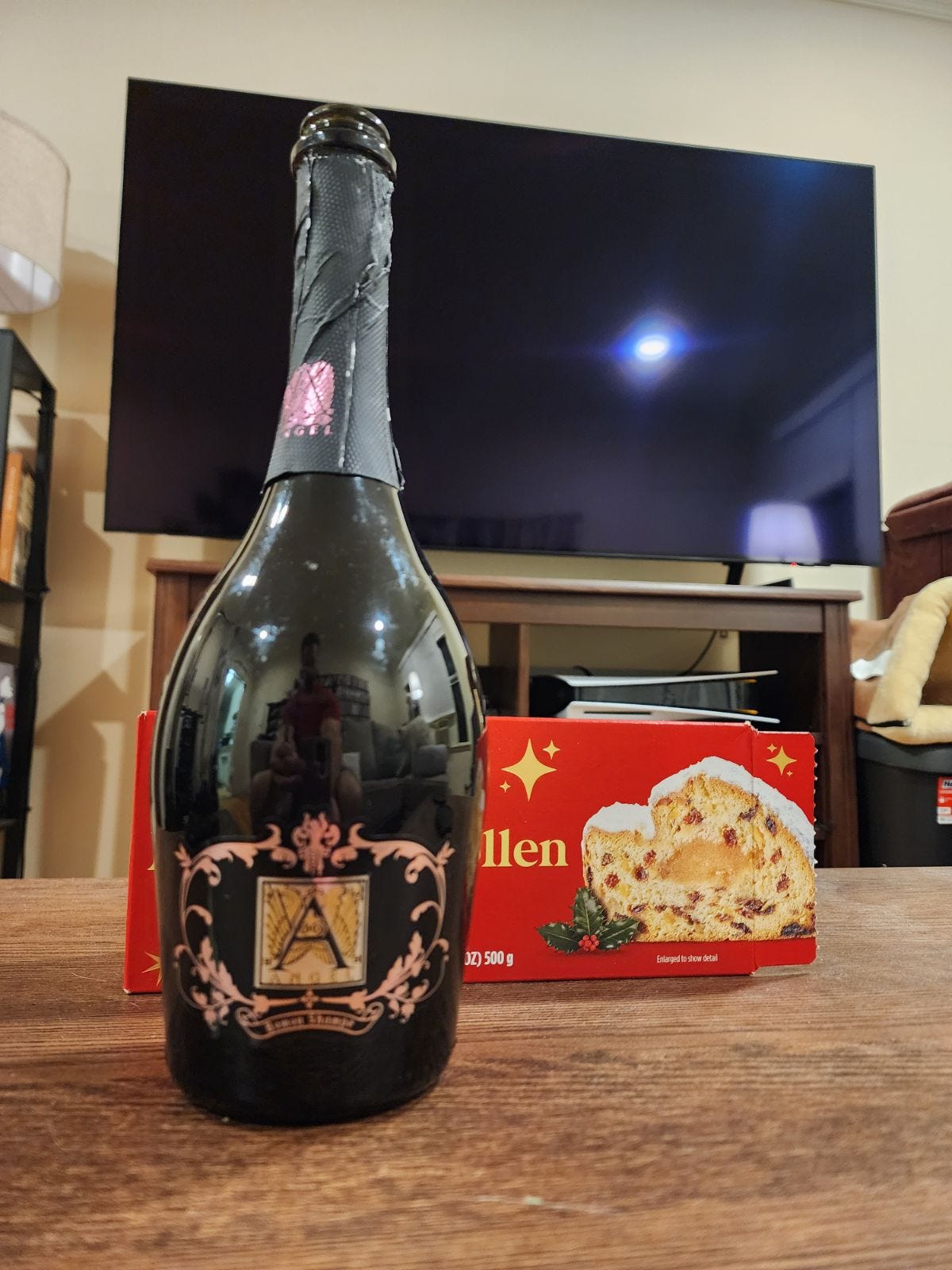
Bomon Shampe Angel Rose Brut, Ukraine (Support!)
Like Carrie, I tried to find a Polish wine, and when that failed, I started to look around at the countries it shared a border with.
Now, my first thought was to find a wine that sparkles, because this movie is effervescent and has sparkling wit throughout. I was thinking dry, not sweet, because of the wit is dry but also because of the bleakness within its humor - this is not quite a feel good film. There’s pain here, a suffering that has to be accepted and taken in alongside the humor.
So: sparkling, dry, something with a bite and minerality, the less fruitiness the better.
Poland shares a border with Germany and Austria, but the wrong border: all the wine regions in Germnay and Austria are on their West sides, with Poland on the far East. So I kept eyeballing the territories that Poland shares a border with...and suddenly one just stopped me in my tracks and slapped me in the face.
It shares a border, and shares a story with this film, but in the modern day. Yes, I’m talking about Ukraine. Which is currently facing its own invasion from Russia. And their president is an actor! And a comedian, ffs!!!
Bomon Shampe is the one Ukrainian brand that seems readily available in the States. I found it in Total Wine, and opted for thier mostly dry - “Brut” - sparkling rose.2
The wine is produced by OdessaVinProm, the oldest esterprise in the Ukraine and according to some sources, the largest enterprise in all of Europe. It was established in 1857 by French winemaker Francois Nuevau in Odessa under the name “Nuvo celllars”, and produces wines under the “French Boulevard” and “Robert Guliev” trademarks, amongst others, including my wine, Bomon Shampe.
All grapes are Ukrainian terroir, and a blend of Sauvignon Blanc, Cabernet Sauvignon, and Pinot Noir, I think. That’s the blend for their semi-sweet version of their rose sparkling wine, and I couldn’t find anywhere that listed the grapes for this Brut version, so let’s assume they’re roughly the same.
Smells like strawberries, rhubarb, and radishes, like a strawberry radish salad, and tastes like it, too, with a sharp vinaigrette dressing tossed in. And a very minerally finish.
Note from Dave: except for a whole slew of critics at the time, especially the New York Times! Which I’m starting to realize has never been on the right side of history when it comes to their hot takes on culture, my god. How do they still have their reputation?
“Brut” means mostly dry, but with a touch of residual sugar. You won’t notice said sugar, it won’t taste sweet, the amount is so low. But it helps to balance out the sharp, acidic elements of most sparkling wine. An “Extra Brut” would be even less residual sugar, then only a “Brut Nature” (”Nature” being French for “nothing added”) is a sparkling wine with as close to absolute zero levels of residual sugar as possible.


